K-Beauty is making an undeniable mark on the global stage, expanding far beyond traditional skincare. According to INTHEBLACK (CPA Australia), the Australian market alone is projected to hit A$2.08 billion (approximately ₩18 trillion) by 2025, while Business Times forecasts a global market value of US$11.4 billion (approximately ₩15 trillion) by the same year. This impressive growth isn't just about innovative products; it's also driven by marketing strategies that have redefined skincare as 'self-care' and 'health.' Even with Chinese beauty brands gaining traction, K-Beauty continues to lead global beauty trends with its unique approach.
| Rank | Change | Product/Brand | Key Metric/Trend |
|---|---|---|---|
| 1 | ▲ | Medicube Mud Mask | TikTok Germany viral (2026-10-30) [Source 1] |
| 2 | ▲ | Medicube Firming Serum | TikTok US viral (2026-10-31) [Source 2] |
| 3 | ▲ | MONCLOS | Expand Australia retail market entry (2026-11-02) [Source 3] |
| 4 | — | K-Beauty Skincare | Australia imports up 40%+ (YoY) [Source 3] |
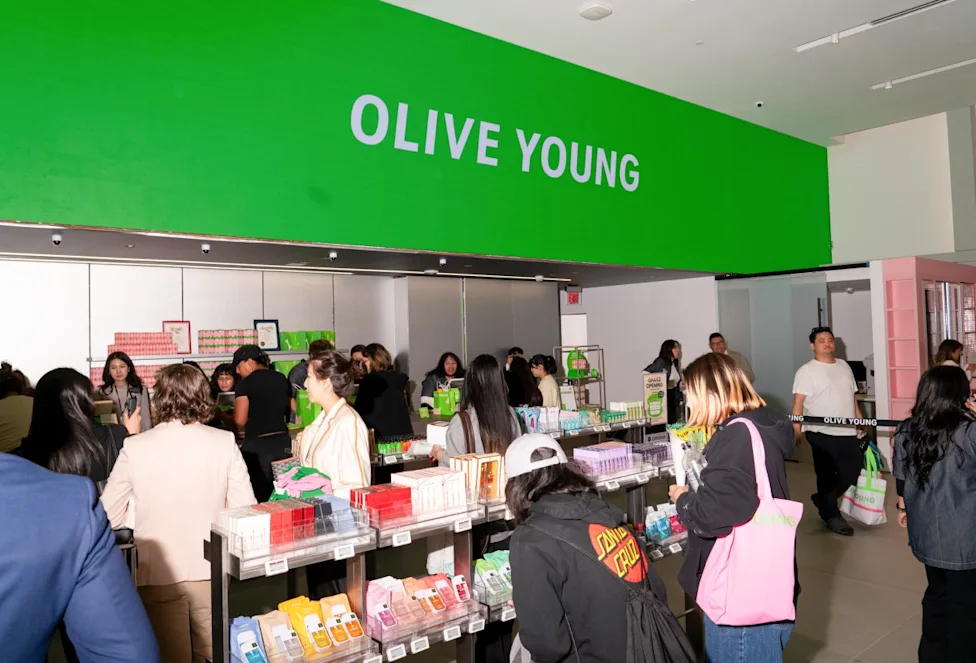
| 5 | ▲ | Olive Young | Introduce 'shop-in-shop' concept in US Sephora [Source 9] |
| 6 | — | Bakuchiol | Most popular skincare ingredient in Korea [Source 9] |
| 7 | NEW | Azelaic Acid | 주목 as next-gen K-Beauty ingredient [Source 10] |
Global Market Growth Drivers: Innovation and Accessibility
K-Beauty's remarkable surge isn't just about superior products; it's rooted in a strategic approach. INTHEBLACK (CPA Australia) highlights K-Beauty as a key growth driver, projected to reach A$2.08 billion by 2025. The core of its success lies in rapidly responding to consumer needs and introducing innovative products at affordable prices. Moreover, Business Times reported that K-Beauty grew by 50% over five years, reaching US$11.4 billion in 2025, and is widely recognized for its 10-step routine aimed at achieving 'glass skin.' Notably, K-Beauty continues to cement its unique standing even as Chinese beauty brands intensify their competition in the global market.
The Power of Social Media and Ingredient Education
Social media has played an immense role in K-Beauty's success. According to Yahoo Shopping, K-Beauty has completely transformed American consumers' perceptions by redefining skincare not just as beauty, but as 'self-care' and 'health.' Claire Kane (클레어 케인), EVP and Director of Strategic Planning at VM, observed that "marketing has reconfigured the vocabulary around skincare efficacy," noting how foundations are now marketed as 'serums' and lipsticks as 'lip oils.' Platforms like TikTok Shop and Amazon enable consumers to watch creators' 'deep dive' reviews and instantly purchase products, fostering organic discovery and a passionate 'stan' culture around ingredient science in K-Beauty.
K-Beauty brands particularly highlight ingredient transparency and tend to use milder active ingredients compared to Western products. David Van Veen (데이비드 반 빈), Director at beauty branding agency MSLK, explained that Bakuchiol (바쿠치올), a highly popular skincare ingredient in Korea, is relatively less known in the U.S., underscoring the importance of consumer education. The 'shop-in-shop' partnerships between Sephora and Olive Young (올리브영, Korea's largest beauty chain) are also part of this educational strategy.
Next-Gen K-Beauty Ingredient Trend: Azelaic Acid
K-Beauty's innovation also zeroes in on discovering novel ingredients. According to Threads, Azelaic Acid (아젤릭산) is drawing attention as it could be the next PDRN. The competitive edge for K-Beauty brands isn't just about how quickly they unearth new ingredients, but also how they re-position existing ones by linking them to specific consumer concerns. This strategy, coupled with 'ingredient enthusiast' consumers' constant desire to experiment, will continue to fuel K-Beauty's sustained growth.
In conclusion, K-Beauty is reshaping the global market by presenting new values like 'self-care' and 'health,' moving beyond simply selling products. 'Organic discovery' and a 'deep dive into ingredient science' facilitated by digital platforms like TikTok are forging powerful connections with consumers. As Claire Kane (클레어 케인) wisely put it, "If brands truly immerse themselves in skin health with the community, beyond immediate sales, synergy will naturally occur." Innovative ingredient discovery and positioning strategies, exemplified by Bakuchiol and Azelaic Acid, are poised to be key drivers for K-Beauty's sustained growth.