K-Beauty is making new history in the global market. According to Euromonitor International, the online K-Beauty market size is projected to reach $15 billion (approximately 20 trillion won) by 2025, growing by $2.5 billion (approximately 3.3 trillion won) year-on-year, proving its strong potential. This growth isn't just about numerical expansion; it shows K-Beauty establishing itself as a key driving force in the global beauty industry.
K-Beauty's Record-Breaking Growth
According to a report by Health Chosun (health.chosun.com), K-Beauty export value in October 2026 reached an all-time monthly high. Notably, the cumulative export value from January to October already surpassed last year's annual total. According to the 'October 2026 Export and Import Trends' announced by the Ministry of Trade, Industry and Energy (산업통상부) on the 1st, Korea's total exports last month surged by 93.7% year-on-year to $115.28 billion, demonstrating the strong performance of overall Korean exports, including K-Beauty.
Global Companies Accelerate Entry into Seoul
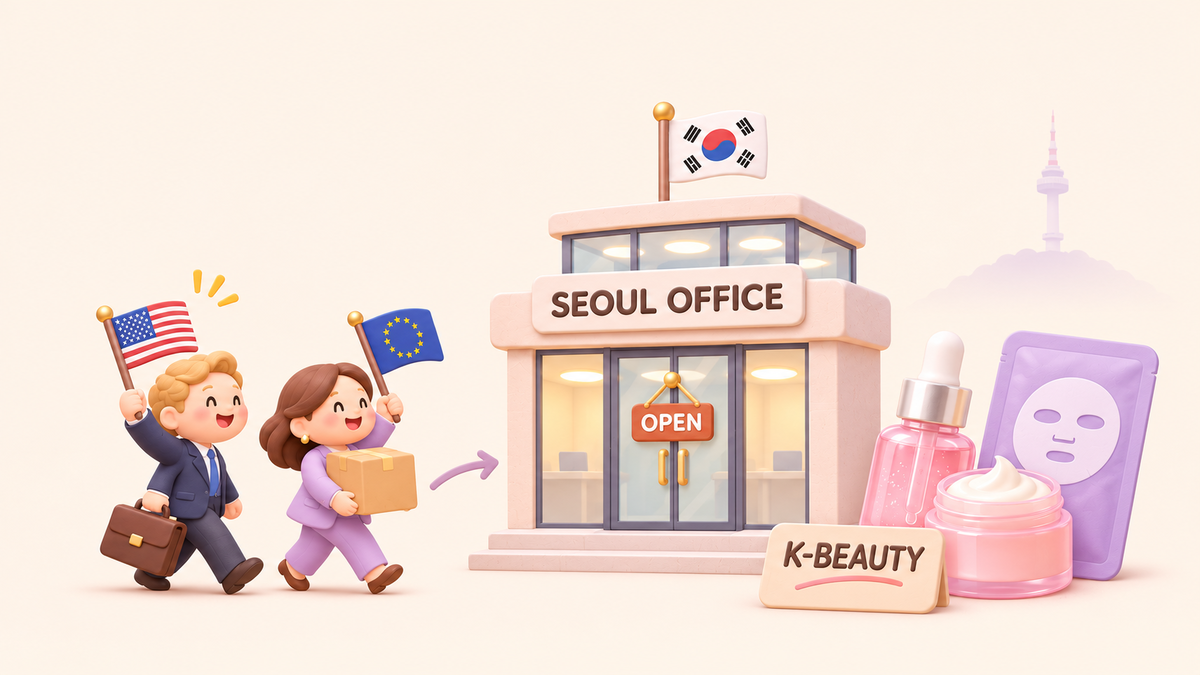
Driven by K-Beauty's global popularity, American and European companies are actively establishing bases in Seoul. According to a report by Seoul Economic Daily (en.sedaily.com), these companies are expanding their collaboration with K-Beauty by supporting the overseas sales of promising K-brands and establishing research centers to leverage Korea's domestic manufacturing and research capabilities. Notably, US e-commerce and marketing company Front Row (프론트 로우) opened its Seoul office last month, stating its intention to help brands expand sales and marketing on global online channels like Amazon and TikTok Shop.
Global chemical company BASF cited 'innovative ingredients, differentiated textures, and performance that consumers can feel' as K-Beauty's core competitive strengths, suggesting that these factors are driving the expansion of collaborations with overseas companies (thebk.co.kr).
Expansion and Collaboration of Domestic and International Distribution Channels
The expansion of domestic distribution channels is also a crucial pillar of K-Beauty's growth. MUSINSA (무신사), a major online fashion and beauty retailer in Korea, officially opened its 100th offline store, 'MUSINSA Beauty Seongsu' (무신사 뷰티 성수), in Seongsu-dong, Seoul, on the 11th, signaling a full-scale expansion of its beauty business (beautytravelnews.com). This move is interpreted as a strategy by MUSINSA, an online powerhouse, to increase K-Beauty's accessibility by expanding its offline presence.
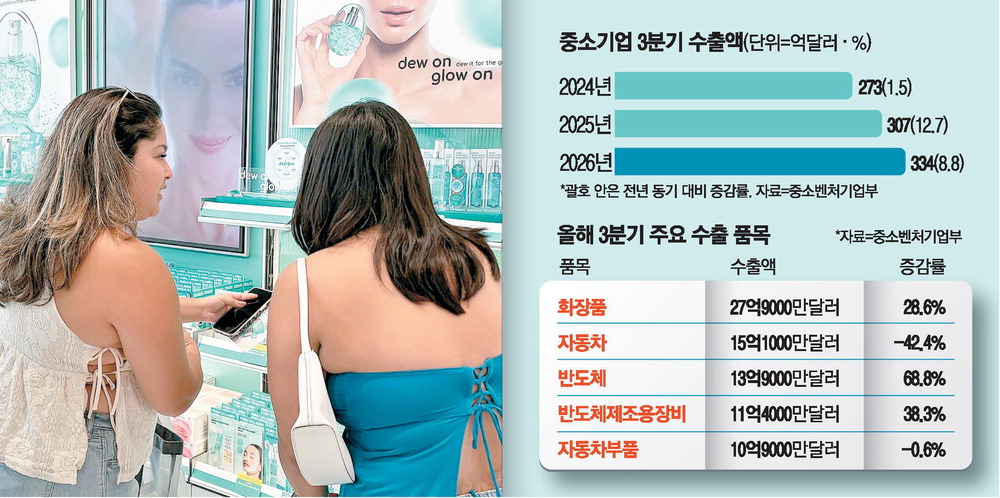
Overseas, Olive Young (올리브영), Korea's largest beauty chain, is strengthening its presence in the United States. According to a Kagit.kr (kagit.kr) report, Olive Young is accelerating its expansion in the US market by opening five additional stores in California. Furthermore, Sephora (세포라), through its partnership with Olive Young, has introduced 19 Korean beauty brands to hundreds of its US stores, demonstrating how Korean retail expertise is influencing the global market (bewedit.com).
https://www.beautytravelnews.com/news/view.html?section=2&category=101&no=13008K-Beauty: A Hub for Global Collaboration
These phenomena suggest that K-Beauty is moving beyond simple product exports to establish itself as a hub for collaboration and innovation within the global beauty market. Overseas companies are seeking to leverage Korea's manufacturing and research capabilities and create synergy through partnerships with promising K-brands. The 'innovative ingredients, differentiated textures, and performance that consumers can feel' cited by BASF as K-Beauty's strengths serve as significant motivators for these global collaborations. This marks a strategic turning point for K-Beauty, solidifying its status as a key partner in the global beauty industry.
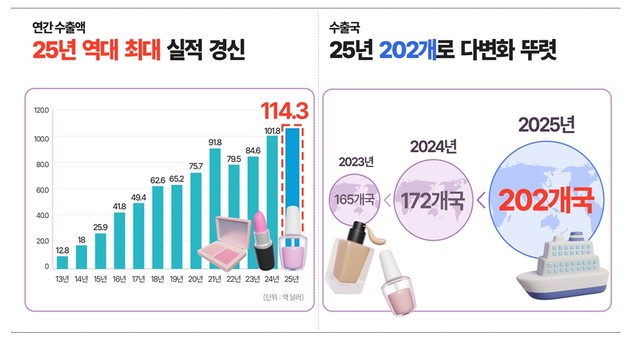
With export destinations diversifying beyond existing major markets like the US and China to include Europe, and strategic investments continuing from both domestic and international companies, K-Beauty's sustainable growth is expected to accelerate even further. In particular, the color cosmetics OEM (Original Equipment Manufacturer) and ODM (Original Design Manufacturer) market is projected to grow at an average annual rate of 6.7% from 2026 to 2033, which will support the overall growth trajectory of K-Beauty (linkedin.com).