While a debate over Japan's strict perception of tattoos heats up Korean online communities, a popular *tteok* (rice cake) pop-up store in a Korean department store recently sparked consumer outrage over its sales practices. Simultaneously, Netflix K-content achieved a remarkable milestone, with 80% of its global subscribers watching Korean dramas or films, and over 4,600 police officers are set to be deployed for Halloween safety in Korea.
These four seemingly unrelated events, as of October 2026, vividly illustrate the multifaceted changes facing Korean society and culture. From the evolving boundaries of cultural acceptance and consumer expectations to the growing importance of public safety amidst expanding global influence, these issues raise fundamental questions about what we should preserve and what we need to adapt in a rapidly changing era. Kagit.kr delves beyond these individual incidents to deeply analyze their inherent structural meanings and societal implications.
What Happened: Key Facts Summary
Japan's Tattoo Perception Controversy: On October 23, 2026, discussions on the Korean online community TheQoo (더쿠) brought renewed attention to Japan's extremely strict perception of tattoos. The background for companies' reluctance to hire tattooed individuals due to their association with *yakuza* (조직폭력배, organized crime syndicates) was discussed, contrasting sharply with Korea's relatively more lenient attitude. (THEQOO)
Department Store Pop-up *Tteok* Controversy: On October 19, 2026, a pop-up store called 'National Tteok Pilgrimage 2' (전국 떡 순례2) at the Lotte Department Store Jamsil branch (롯데백화점 잠실점), a major Korean department store, sold famous *chapssaltteok* (찹쌀떡, glutinous rice cakes) that, unlike their advertised photos, came in empty-looking containers, drawing customer complaints. Consumers who waited for hours to purchase expressed their disappointment. (KOREA WAVE)
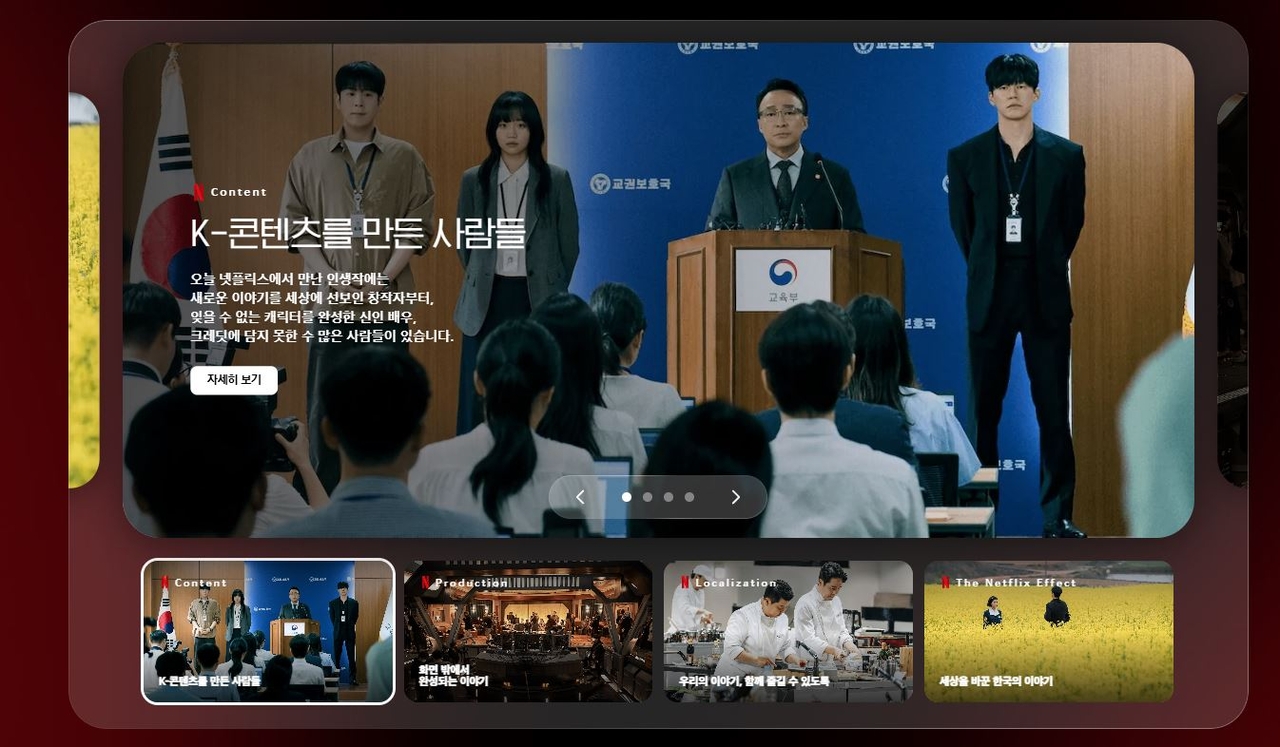
Netflix K-Content Global Viewership: On October 23, 2026, to mark its 10th anniversary of service in Korea, Netflix announced that approximately 80% of its global subscribers had watched Korean dramas or films. Over 200 Korean titles achieved the milestone of entering the global Top 10. (KOREA HERALD)
4,600 Police Officers Deployed for Halloween: On October 23, 2026, the Seoul Metropolitan Police Agency (서울 경찰) announced that 4,594 police officers would be deployed to expected crowd-heavy areas like Itaewon (이태원) during the Halloween period to strengthen safety management. This measure is part of an effort to raise safety awareness following the tragic Itaewon crowd crush on October 29, 2022. (KOREA HERALD)
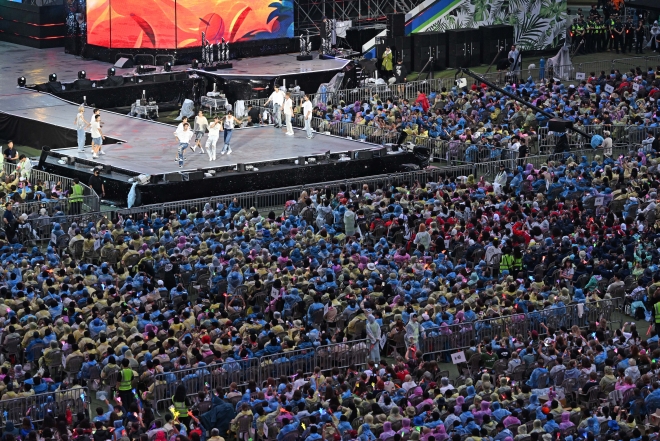
K-Pop Super Live Concert 'Hot Enthusiasm' [Seoul Photo]
넷플릭스 K-콘텐츠 시청률 (글로벌) 80%
핼러윈 경찰 동원 인원 (서울) 4,594
Stakeholder Perspectives and Motivations
| Issue | Key Stakeholders | Stance & Motivation |
|---|---|---|
| Japan Tattoo Perception | Japanese Society/Businesses | Associate tattoos with Yakuza, manage corporate image & reputation, maintain conservative social atmosphere |
| Individuals with Tattoos | Freedom of self-expression, pushback against social stigma & discrimination | |
| Tteok Pop-up Controversy | Consumers | Disappointment with product different from ad, demand fair value, demand improvement through expressing dissatisfaction |
| Department Store/Tteok Shop | Attract customers & increase sales, manage brand image, resolve consumer complaints & prevent recurrence | |
| K-Content Success | Netflix | Secure global subscribers, successful investment & distribution of Korean content, expand market share |
| Korean Content Production Companies | Enter global market, increase revenue, expand creative opportunities | |
| Halloween Safety | Seoul Police | Manage safety at crowded events, prevent recurrence of large-scale disasters, ensure public safety |
| Citizens Attending Event | Enjoy event in safe environment, alleviate anxiety about accident risk |
Cultural Boundaries: The Tattoo Perception Gap
In Japanese society, tattoos continue to carry a strong social stigma due to their association with *yakuza* (조직폭력배, organized crime syndicates). On the Korean online community TheQoo (더쿠), users reacted with "irony" to the fact that Japanese society is sensitive not only to large tattoos like *irezumi* (이레즈미, traditional Japanese full-body tattoos) but also to small ones. One netizen pointed out a realistic reason why companies avoid tattooed employees, stating, "If it's revealed that a *yakuza* was hired, that company will be ruined, so there's no choice." In contrast, Korea has a relatively more lenient perception of tattoos. Many TheQoo users commented, "It seems like our country is uniquely lenient." This difference in perception is intertwined with the historical and cultural backgrounds of both nations. Particularly in Japan, there remains a high aversion to displaying tattoos in public places, often requiring individuals to cover them in hot springs (*onsen*) or gyms. This clearly illustrates a cultural clash between individual freedom of self-expression and societal norms. (THEQOO)
“What's a soapland?”
From TheQoo community comments (THEQOO)
“If it's revealed that a *yakuza* was hired, that company will be ruined, so there's no choice @1 Simply put, it's an establishment, that kind of establishment…”
“It seems like our country is uniquely lenient.”
“I really hate tattoos.”
“Wow, when we think of tattoos, we think of Japanese *yakuza* *irezumi*, but it turns out Japan makes a fuss even over small tattoos like that. It's kind of ironic, lol.”
Consumer Experience and the Crisis of Brand Trust
The *tteok* controversy at the 'National Tteok Pilgrimage 2' (전국 떡 순례2) pop-up store, held at the Lotte Department Store Jamsil branch (롯데백화점 잠실점) in Korea, quickly spread online, drawing widespread consumer anger. According to a KOREA WAVE report, consumers who waited in line for hours to make a purchase could not hide their disappointment upon receiving *chapssaltteok* (찹쌀떡, glutinous rice cakes) in containers that appeared empty, unlike the advertised photos. On social media, criticisms poured in, such as "Waited 3 hours for this?" and "Isn't this just a sample *tteok*?" This incident highlights not just an issue with product quantity, but also how critically the discrepancy between exaggerated advertising and the actual product can impact consumer trust. Especially in an era where 'line-worthy restaurants' (줄 서는 맛집) marketing is prevalent, it's crucial not to overlook that consumers expect not just fame, but corresponding quality and experience. Given that brand trust is difficult to restore once damaged, both the department store and its vendors must redouble their efforts in consumer communication and quality management. (KOREA WAVE)
온라인 네티즌 — SNS“Waited 3 hours for this?”
Online reactions cited in the KOREA WAVE report (KOREA WAVE)
“Isn't this just a sample *tteok*?”
“The filling looks sparse compared to the promotional photo.”
“4,500 won for 4 *tteok* of that size feels expensive.”
The Light and Shadow of Global K-Content: Growth and Safety
The figures released by Netflix to commemorate its 10th anniversary of service in Korea clearly demonstrate the explosive global influence of K-content. The fact that 80% of global subscribers have watched Korean titles, and over 200 titles have entered the global Top 10, signifies that K-content has now moved beyond a mere trend to establish itself as a mainstream culture. (KOREA HERALD) This cultural success simultaneously casts a shadow of safety concerns at events attracting large crowds. The deployment of 4,594 police personnel by the Seoul Metropolitan Police Agency (서울 경찰) to enhance safety management during Halloween reflects a strong commitment to prevent a repeat of the painful 2022 Itaewon crowd crush. (KOREA HERALD) With an increasing number of foreign tourists visiting Korea for K-content-related activities like K-pop concerts and drama filming locations, and more people participating in domestic events, ensuring public safety is ultimately the prerequisite for sustaining cultural achievements.
Addressing the Strongest Counterargument: 'Are These Isolated Incidents Being Over-Interpreted?'
Some might argue that these individual incidents do not represent society as a whole and that their significance is being exaggerated. This perspective suggests that Japan's tattoo perception stems from a unique cultural background, and the *tteok* pop-up store controversy is merely a one-off issue with a specific vendor. Furthermore, it could be argued that enhanced Halloween safety measures are a natural response to lessons learned from past tragedies, and the success of Netflix K-content is an already established trend. However, such counterarguments overlook the symbolic nature of each event. The difference in tattoo perceptions is a crucial point for discussing cultural diversity and inclusivity in an era of globalization, while the pop-up store controversy demonstrates the ripple effect of online public opinion on consumer experience and brand trust. The success of K-content and heightened Halloween safety measures clearly reveal the dual nature of expanding 'soft power' and the accompanying social responsibilities. All of these factors can be interpreted not merely as isolated incidents, but as signals of structural changes facing Korean society.
[Analysis] The Duality of Korean Society in a Whirlwind of Change
Today, Korean society simultaneously exhibits a dual nature: cultural openness alongside conservatism, high consumer awareness alongside inadequate service quality, and global success alongside the responsibility for public safety. The controversy surrounding tattoo perceptions in Japan highlights the persistence of deep-rooted cultural taboos, while contrasting with the expanding freedom of self-expression within Korea. The *tteok* pop-up store controversy serves as a reminder of how significantly consumer complaints, amplified online, can impact a company's reputation, emphasizing the importance of selling 'experiences' rather than just products in the current era. The overwhelming success of Netflix K-content proves that Korean culture's soft power has captivated the world, but simultaneously, safety management at large-crowd events like Halloween underscores that it is an essential factor for ensuring the sustainability of such cultural exchange. Korean society is currently undergoing a transitional period where disparate values clash and are readjusted amidst rapid change, facing structural challenges that require confronting both its bright and dark sides and responding wisely.
Outlook: What to Watch in 2026
Moving forward, Korean society should monitor the direction of change in the following three aspects. First, the expansion of cultural flexibility. We can gauge through online communities and media trends whether societal acceptance of individual choices like tattoos will gradually broaden, or if conservative views will persist. Second, the acceleration of consumer-centric market changes. Following the pop-up store controversy, how much companies strengthen honesty between advertising and actual products, and the speed and manner in which they respond to consumer complaints, will be crucial indicators. Third, the advancement of public safety systems amidst global cultural exchange. As long as K-content's success continues, events attracting large crowds will persist. It will be important to observe how government and local authorities' safety management systems evolve and align with international standards, as exemplified by the Seoul Metropolitan Police Agency's Halloween deployment. These three observation points will be key signals for Korea to achieve balanced growth.