K-PopK-DramaK-BeautyRankingsK-Influencers
Login

Global K-Culture Media & Community. Your gateway to K-Pop, K-Beauty, K-Drama, and Korean entertainment. Real-time rankings, news, and community.

Company

  • About Kagit
  • K-Influencers
  • For Brands
  • For Creators

Navigation

  • Home
  • K-Pop
  • K-Drama
  • K-Beauty
  • K-Food
  • K-Travel
  • K-Style
  • K-Biz
  • K-Medi

Rankings

  • All Rankings
  • K-Pop Buzz Chart
  • K-Beauty Ranking
  • K-Drama Chart
  • K-Food Trends
  • K-Style Chart
  • K-Influencer Index

Community

  • Login
  • Bookmarks
  • Settings

Contact

admin@kagit.kr
ServicesKagitkagit.krwishnotewishnote.krComing soonwishnote.twwishnote.tw→ merging into kagit.kr TC

© 2026 Kagit. All rights reserved.

TermsPrivacy
HomeDiscoverRankingsEventsMe
HomeK-Pop[In-depth Report] Relying on Netflix to make money? The cruel reality unveiled in the Korean drama industry: it will eventually be strangled!
K-PopK-Biz

[In-depth Report] Relying on Netflix to make money? The cruel reality unveiled in the Korean drama industry: it will eventually be strangled!

阿咩李卡諾7/23/2023 1 min read

News broke last month that the Korean Original creation team of Disney + is suspected of disbanding, with not only the members of the team leaving Disney +, but also rumors that it is related to Disney's global layoffs.

Image Source l disneypluskr

According to a report by the Korean media outlet Chosum, industry insiders have revealed that 15 members of the Korean original content development team at the international OTT platform, Disney+, have left the company, but the original content they produced is currently being retained.

Image Source l disneypluskr

There has been no official statement regarding the disbandment of the South Korean Disney+ original content development team. However, external analysis suggests that the reason for the team's dissolution is due to its failure to achieve significant growth within South Korea.

Image Source l disneypluskr

In fact, Disney+ began its services in South Korea on November 12, 2021. However, as of May this year, the number of active users of Disney+ in Korea is approximately 1.79 million, which is less than the same period's membership numbers of local OTT platforms such as tving (5.15 million), Coupang Play (4.31 million), and Wavve (3.92 million).
阿咩李卡諾

阿咩李卡諾

comments (0)

0

Related Posts

[Hot Topic] Dispatch revisits past lawsuit doubts over Son Seong Yeon, questioning if the 'FIFTY FIFTY' producer is a habitual offender! K-Pop

[Hot Topic] Dispatch revisits past lawsuit doubts over Son Seong Yeon, questioning if the 'FIFTY FIFTY' producer is a habitual offender!

Recently, the FIFTY FIFTY incident has been making huge noise. Producer Ahn Seong-il is accused of using the same tactic to exploit Son Sung-wan. Korean media Dispatch has even dug out a fake disposition judgement made for Son Sung-wan in 2017. Many netizens also point out that Ahn Seong-il is a habitual offender. In February 2017, the Seoul Central District Court rejected all applications for the case, with the litigation costs borne by Son Seung-yeon. It is known that Son Seung-yeon signed an exclusive contract with Fortune company in 2012, and terminated the contract four years later through email notification. At the time, the reasons Son Seong Yeon demanded for contract termination were, ① The previous agency Fortune failed to produce a new album, ② Son Seong Yeon didn't profit from Fortune, ③ Fortune was not supportive or obstructed her entertainment activities, ④ Fortune did not fulfill its liquidation obligations, ⑤ Fortune refused or hindered her participation in musical supports, and ⑥ Fortune forced Son Seong Yeon to publicly disclose her home environment, etc. The court pointed out that even though the agency did not produce one new album every year, it had produced more than three singles on average annually. Therefore, it is hard to view this as a breach of contract. The other reasons were also considered by the court to be unreasonable and were dismissed, hence the case request was not accepted and was rejected. As of April 2018, two months after Son Seung-yeon terminated her contract with Fortune, she signed an exclusive contract with 24th Street, which is represented by Ahn Seong-il. Ahn Seong-il had arranged Son Seung-yeon's cover of "The First Snow's Falling" in 2014, which was followed by an event where Son Seung-yeon requested to terminate the contract. It led many netizens to associate this with the recent FIFTY FIFTY incident. Korea media also revealed that Son Seung-yeon once posted on Instagram thanking producer An Seong-il, even calling him the "representative oppa". Many netizens responded to the incident by saying, "She actually called the representative oppa..." and "I don't want to see her play anymore, representative oppa...". Other netizens also pointed out, "At first I thought it was Son Seung-yeon's former agency's fault, but behind it was An Seong-il. He really is a gangster terminator," "That poor agency! It even went bankrupt..." "If you want to sign with the person you want, you have to wait until the contract expires. It's wrong to blame a decent agency and then unfairly cancel the contract," "An Seong-il is a repeat offender."

Image Source l  netflixkr

However, if we look at Netflix, which is also an international OTT platform, it not only continues to lead the development of original content in Korea, but has even released many acclaimed and popular works. But recently, Korean media has conducted an in-depth analysis that the current development of Korean drama is facing a pressing crisis.

Image Source l  netflixkr
Image Source l netflixkr

According to a report by Korean media "Herald Economy," although K-Content (cultural content) has been very active internationally in recent years, Korean dramas, which are considered a major influence, are facing significant crises. The report points out current issues such as the escalating production costs of Korean dramas, over-reliance on Netflix, threats to domestic OTT platforms, and overall reduction in Korean drama production.
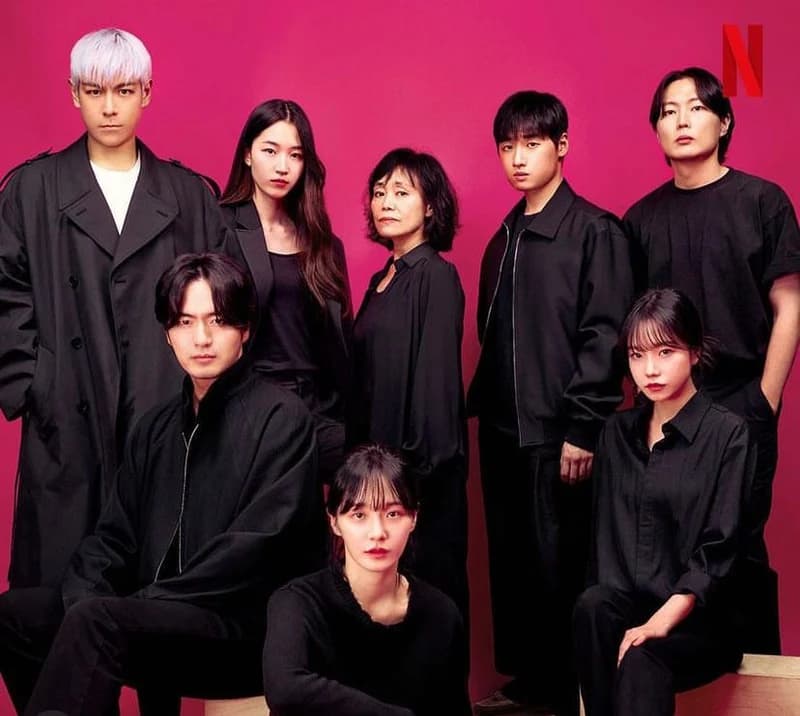
Image Source l  netflixkr
Image Source l netflixkr

Reports indicate that due to the recent linear rise in television production costs, from about 700 million Korean won per episode a few years ago to 1 billion or even 1.5 billion won per episode, not every production company can afford such large numbers under this kind of competition.

Image Source l  netflixkr
Image Source l netflixkr

Even after investing a significant amount of funds, no matter how successful the drama might be or how well-known the work becomes, it is still impossible to recoup the production costs. Thus, if one truly wants to gain abundant resources and break into Netflix, it seems that one will still have to line up and wait for now.

Image Source l  wavve.official
Image Source l wavve.official

There aren't many platforms that can bear such huge production costs, which has caused an imbalance in the entire industry. Although there are now many local OTTs rising in South Korea, the majority of the situation still relies on a single model, which is quite dangerous for the industry.
Image Source l tving.officia

A representative from a certain TV production company said, "The trend of Korean dramas constantly entering the global OTT platform, Netflix, is inevitable, and it is only a matter of time before this kills the circulation and diversity of the market and platform."
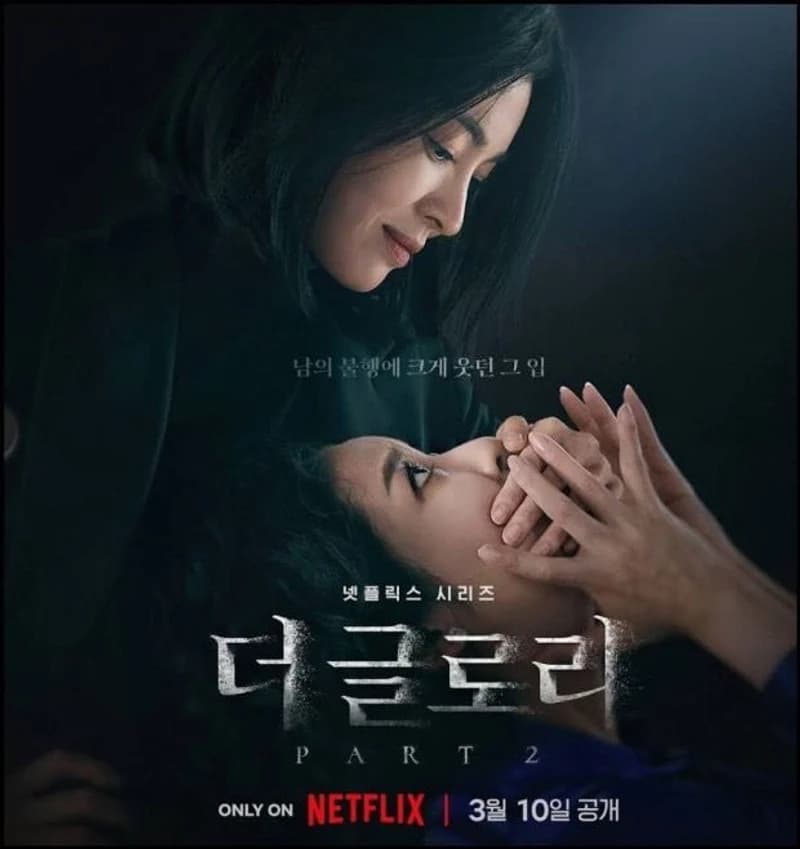
Image Source l netflixkr

Due to the issues that arose from the initial production costs, it was possible to produce TV dramas in the past without investing a high amount of production cost. However, it is feared that we have now reached the limit, creating a market cycle of "over-betting large amounts of money to gain substantial returns".
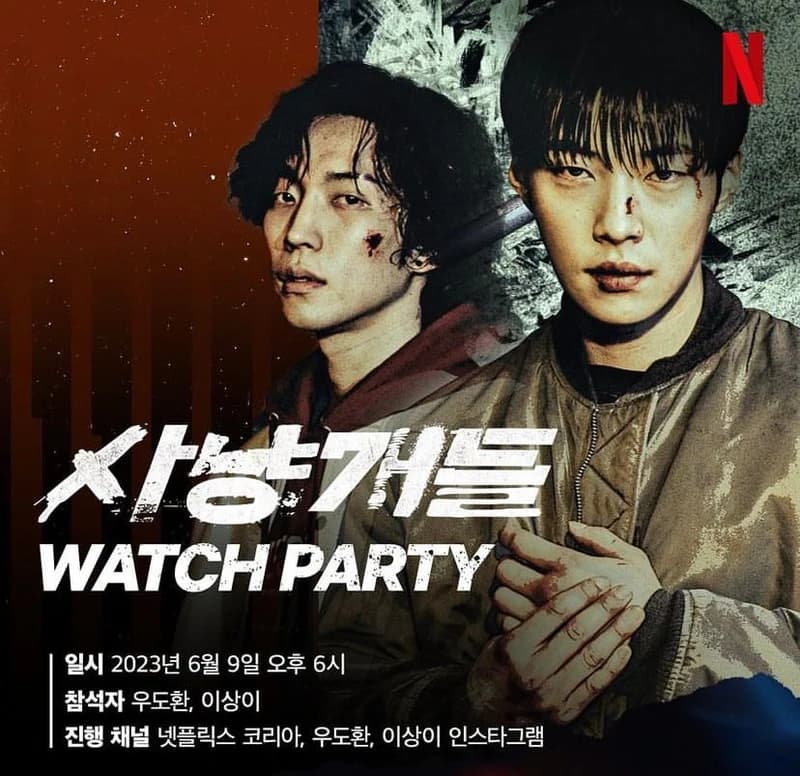
Image Source l netflixkr

For instance, the annual production of dramas used to be around 100-150, but due to a surge in production costs, it has reduced by at least half, leaving only about 70. According to statistics by the Korean media《Herald Economy》, even the 'mini-series' produced by the three major TV stations have deficits of several hundreds of millions or even billions.

Image Source l mbcdrama_pre

This phenomenon is also happening on broadcast television, such as the recent production of many popular shows by JTBC and tvN, two cable TV stations. Even if all advertisements are sold out during the drama broadcast time, they still face deficit.

Image Source l jtbcdrama

Therefore, many TV stations have started to fill in the gaps left by the dramas they could not recover by adding variety shows. As even large-scale variety shows do not cost as much to produce as dramas, channels like tvN have begun producing a range of variety shows, primarily those that can be exported overseas.

Image Source l tvn_drama

Even though the industry behind Korean dramas may seem far removed from the audience, it's hard to imagine the many connections behind each successful work, from 8-episode mini series to regular 16-episode dramas, each having different impacts. (To be continued)

Image Source l jtbcdrama
Caridee小編3 years ago
【深度报道】OH买买买!卖偶像周边有赚吗?业界证实:只有这些团体才有赚头K-Biz

【深度报道】OH买买买!卖偶像周边有赚吗?业界证实:只有这些团体才有赚头

相信追星的大家,多少都有过买周边、买专辑的经验。以偶像回归为例,从基本的买专辑提升销量开始,专辑还分版本、随机小卡、不同通路特典、签售专辑特典到智能专辑甚至是后续专辑,买都买不完。 然而,这还不是结束,如果偶像开演唱会或见面会就会需要购买手灯、官方MD(商品),即使不办活动,也会有各种联名代言或是从偶像延伸出的虚拟角色等相关商品。虽然购不购买是个人选择,但在这些商品和营销手段的背后,究竟隐藏了多少商机和收益,都是我们下面将要一起讨论的内容。 从偶像的周边商品开始,自K-POP开始流行后市场逐渐扩大,除了专辑本身外,艺人明星的周边商品也成为粉丝主要消费的项目之一,而销售途径也从单一的实体店面(例如:唱片行)转向在线购物,甚至开始推出限定的“快闪店”等实体销售据点,来刺激消费。 尽管在线购买周边商品现在并不稀奇,但在韩国娱乐产业中,最早转战在线销售的可以说是SM以及YG。他们不仅独立开设在线途径(例如:SMTOWN),而且准确的看中了海外市场的潜力,让非本地的粉丝能更方便地进行购买。 除了销售渠道的改变,许多公司还会另外推出地区性周边,例如日本限定周边、欧美国家限定商品等。但是一味的推出周边商品就一定能卖出去吗?如何刺激粉丝购买以及计算收益也是公司必须去策划及考量的事。 "偶像明星周边商品"顾名思义就是与偶像明星相关的产品,但现在仅仅以与偶像明星的关联来包装商品是不够的,而是开始强调专属感以及如何与粉丝互动和连接。例如,许多公司会推出成员限定生日周边,不仅创造出专属感,也让购买生日周边商品成为庆祝偶像明星生日的一种方式。 此外,在音乐会上挥舞的应援棒是艺人和粉丝建立联系和互动的实物之一。粉丝可以通过应援棒为艺人加油,甚至可以使用中控系统使应援棒随着台上的演出变换颜色,当台上的艺人在热歌热舞的同时,台下的粉丝们可以通过不同的应援棒颜色,参与在表演中,仿佛和艺人融为一体一起完成演出。 然而,难道艺人非得发专辑回归、有活动或是特定节日才能卖周边产品吗?许多公司也开始寻找品牌合作推出联名商品,或是设计虚拟角色等原创商品进行销售,再通过之前提到的快闪店、短期概念店来吸引粉丝,并采取"限时、限量"的营销方式来刺激购买。 但究竟通过销售周边商品能赚取多少收益呢?某家发行明星周边商品的代理公司就曾表示:“现今相比通过音乐获得的收益,销售周边的收益更大。” 从去年的韩国四大经纪公司来看,JYP娱乐第一季度的MD销售额比前一年上升了168%,而HYBE仅在销售MD上,第一季度的销售额就达到682亿韩币。 此外,YG拥有负责MD的上市子公司YG PLUS在去年度的第一季度报告中表现亮眼,销售额也持续增加。而SM娱乐的周边商品销售,销售额也占了20%,收益相当可观。 然而,依靠艺人销售周边商品来获利容易吗?业界人士表示,“除非是SM娱乐或HYBE娱乐等大型策划公司,否则MD商品无法持续销售。”这是因为,粉丝规模越大,MD产品的种类也随之增多,但商品数量以及是否会成为大量库存问题,也是经纪公司必须考虑和承担的事情。 根据韩国媒体《The Fact》的报道,以手电筒为例,最少的生产数量是5000个到1万个不等,再加上手电筒本身的单价稍高,因此大部分的基本订购数量是从1万个开始,订购越多,单价就能被压低。 而最令人感到意外的是,最受粉丝欢迎也是最畅销的MD则是写真集。虽然特殊纸张本身就不便宜,加上装订修改等费用都偏高,但因为深受粉丝喜爱,所以销量上依旧不减。 尽管销售艺人周边商品的收益相当可观,但专家坦言,“销售周边商品的收益确实很多,但除非是有名的大势团体或艺人明星,基本上能获利的规模也相当有限”。 也许,现今有不少的经纪公司仍在激烈的市场竞争中,推出寻求新颖和变化的设计和产品来吸引粉丝,但消费始终是个人选择,无论购买的多还是购买的少,粉丝或消费者是否有能力购买,不造成浪费都是接下来需要面对的问题。(待续)

Admin3 years ago
简体中文
[In-depth Report] Making a documentary only a few years after debut? The real reason why the industry is rushing to produce idol documentaries on OTT.K-Pop

[In-depth Report] Making a documentary only a few years after debut? The real reason why the industry is rushing to produce idol documentaries on OTT.

Whether it's dramas or films, everyone has their own different preferences. However, to invoke the resonance and attention of the majority, besides being entertaining, it's equally important to possess mass appeal. However, when it comes to the entertainment industry, the speed of Kpop's global spread is quite fast, not only sweeping across Asia, but also gradually expanding to the European and American markets. However, compared to the global music market, it still cannot be called popular or mainstream. In other words, Kpop relies more on a solid fan base than casual listeners to maintain a large volume of listens in a short period of time. Given the certain limitations of Kpop and idol-themed content, why have OTT platforms continued to produce idol-themed documentaries over the past two or three years? And besides fans, do people actually watch these documentaries? Unlike typical TV and film productions that have clear scripts and character settings, documentaries express events and experiences from a narrative perspective. Therefore, they mostly attract an audience interested in the event, field, or specific subject matter. Even though the audience for documentaries is quite limited, it's not hard to notice that many OTT platforms have been rushing to produce idol documentaries in recent years.According to the report by Korean media 'Spotvnews', the continuous production of idol documentaries is not only to showcase the glamorous side of idols on stage, but also to reveal the reality behind the scenes. A producer from a certain planning company in the industry said, "From the standpoint of a content creator or from the public's perspective, idol group members are very interesting characters." To elaborate further, "As an artist, one needs to present a world view or performance that aligns with a specific group's direction set by the company. However, they also need to demonstrate perfection and casual charm on stage, indirectly showcasing the dual burdens that idols carry, unable to fully express themselves". How to select shooting groups and talents? Industry insiders revealed that due to the competition of more diverse content, from the perspective of the industry, the number of groups that have recently received strong attention has increased. Under the circumstance where the public's preferences are increasingly subdivided, even if only focusing on one team or one member, it can fully arouse meaningful attention. However, it's not to say that only top idols are eligible for documentary films. As mentioned earlier, due to the certain limitations of the documentary audience, if groups with more topicality or popularity start first, it would be easier to attract the audience. In 2020, Netflix produced "BLACKPINK: Light Up the Sky" with the girl group Blackpink, and Disney+ actively planned documentaries centered around Korean idols.Like the BTS documentary 'BTS Monuments: Beyond the Star', and the individual documentary of member J-Hope, 'j-hope IN THE BOX'. In addition, there are the behind-the-scenes stories of Super Junior, who have been in the industry for 18 years, in "Super Junior: The Last Man Standing". The younger group, NCT 127, has produced "NCT 127: The Lost Boys" based on their world tour process. Also, "TOMORROW X TOGETHER: OUR LOST SUMMER" is set to be released this month. In fact, promoting or marketing idol artists through documentaries is an alternative way to reach new audiences. Although most of the content in the film is likely to resonate with fans, it is also through a narrative mode that allows idol artists to show a different side than what the public usually sees, compared to on stage or in a dynamic mode.

Admin3 years ago

Trending now

  1. 1

    Convicted Sex Offender Go Young-wook Attacks Park Ha-sun, Ryu Soo-young, and Kim Ji-hyun on Social Media

  2. 2

    OH MY GIRL's Mimi Criticized for 'Childish' Speech on 'Earth Arcade,' Sparks Online Debate

  3. 3

    SBS Gayo Daejeon Summer Live Broadcast Glitch Draws Criticism, MCs Under Fire

  4. 4

    ENHYPEN's NI-KI Performs Amid Fan's Death; Mother Travels to Korea

  5. 5

    ARrC Member Doha Posts Cryptic Message, Deletes Instagram After Group's Sudden Disbandment

Cheer the stars of this story

  • Di
    Disney+

    Cheer Level 0

    0
    Your Cheers

Log in to start collecting cheers on this article:

  • Read +5
  • Early reader +5 · 20 spots left
  • Comment +10
  • First comment +20
Log in for the early-reader bonus — 20 spots left