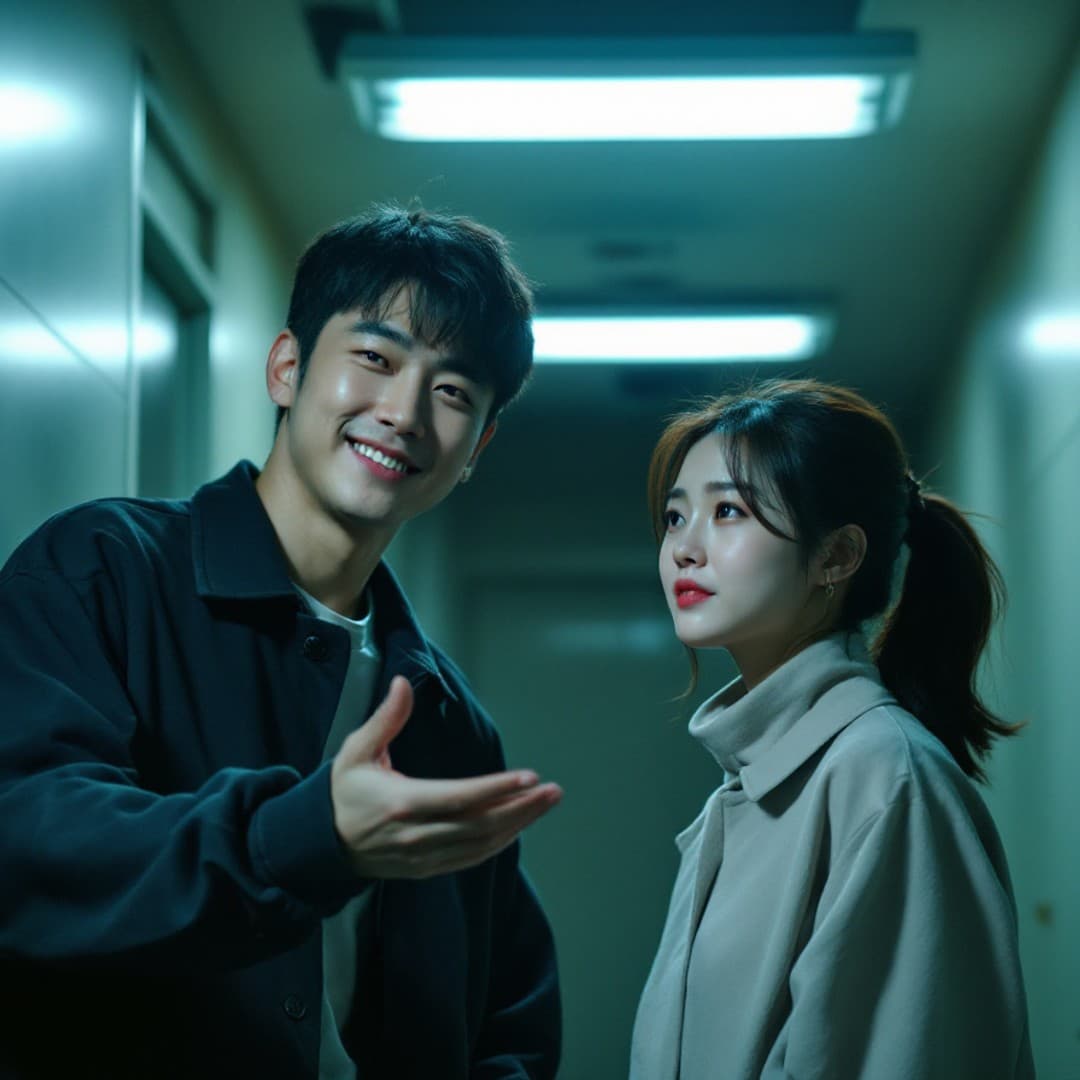
The poster for the Netflix drama 'Tantra,' starring Song Hye-kyo (송혜교) and Gong Yoo (공유), has been unveiled, drawing significant attention. However, as writer Park Hae-young (박해영) publicly criticized the 'flat-fee contract' (매절 계약) practices of global OTT platforms, the issue of K-content creator compensation has emerged as a central debate.
A man places his hand on a woman's shoulder. Dramabeans
While K-dramas achieve unprecedented success in the global streaming market, concerns that the fruits of this popularity are not fairly distributed to creators raise fundamental questions about the sustainability of the K-content ecosystem. The current discussion surrounding 'Tantra' is poised to become a crucial turning point in redefining creator rights and compensation systems within a rapidly changing media landscape.
'Tantra' Poster Unveiled: Netflix has released the official poster for the drama 'Tantra,' starring Song Hye-kyo and Gong Yoo. The drama depicts the passion for success and the intense lives hidden behind the glamour of the Korean entertainment industry from the 1960s to the 1980s. (Source: FunKorea.ID, Naver Entertainment)
Set for December 11 Release: 'Tantra' is scheduled to be released worldwide on Netflix on December 11. (Source: FunKorea.ID)
Writer Park Hae-young Criticizes 'Flat-Fee Contracts': Writer Park Hae-young criticized the practice of 'flat-fee contracts' (매절 계약) with global OTT platforms, arguing that the reality of no additional compensation even if a work is successful must be improved. (Source: Theqoo)
The key events surrounding the drama 'Tantra' are as follows:
October 22, 2026: Netflix releases official poster for 'Tantra' (Source: FunKorea.ID)
October 22, 2026: Writer Park Hae-young raises issues with global OTT 'flat-fee contracts' (Source: Theqoo)
December 11, 2026: 'Tantra' scheduled for Netflix release (Source: FunKorea.ID)
Stakeholder Perspectives: Who Gains and Who Loses
Stakeholder
Stance & Motivation
Key Expectations/Concerns
Netflix (Global OTT)
Strengthen global content competitiveness through star writers and actors. 'Buyout contract' facilitates production cost and risk management.
Attract global subscribers and expand market dominance. Image damage if creator dissatisfaction escalates.
Writer Park Hae-young (Content Creator)
Demand fair compensation for work's success. Enhance creator rights through improvement of 'buyout contract' practice.
Boost creative motivation and drive industry standard changes. Accept disadvantages if existing contract methods are maintained.
Song Hye-kyo, Gong Yoo (Lead Actors)
Enhance work's buzz and completeness based on high recognition and acting skills. Increase personal achievements and brand value.
Strengthen career with successful works. Potential image impact due to non-work-related controversies.
Domestic Viewers (theqoo, Naver)
Anticipation for star actors' new works. Simultaneously, social interest in creator compensation issues.
Watch high-quality K-dramas. Support fair ecosystem through resolution of unfair contract issues.
Global Fans (FunKorea.ID)
High interest in K-dramas and star actors. Secure opportunities to watch new content.
Expect interesting stories and actors' chemistry. Relatively low awareness of domestic industry issues.
'Tantra' Poster Unveiled: Star Power and Global Fandom's Anticipation
The reunion of two Hallyu stars, Song Hye-kyo and Gong Yoo, has generated significant interest for 'Tantra' even before its release. The poster unveiled by Netflix, combined with the intriguing backdrop of the Korean entertainment industry from the 1960s to the 1980s, has piqued the curiosity of fans both in Korea and abroad. Naver Entertainment (네이버 연예) showed a positive response, stating, "With the release of the new poster, anticipation for the drama is growing even higher," and highly praised the potential for success through the synergy of the star actors.
Notably, FunKorea.ID, a global K-drama fan community, actively shared news of the poster release, stating, "Netflix resmi merilis poster 'Tantara', drama Korea terbaru yang dibintangi Song Hye Kyo dan Gong Yoo" (Netflix officially released the poster for 'Tantra,' the latest Korean drama starring Song Hye Kyo and Gong Yoo), and emphasized the drama's appeal by adding, "Drama ini akan membawa penonton ke balik gemerlap industri hiburan Korea pada era 1960-an hingga 1980-an" (This drama will take viewers behind the glitz of the Korean entertainment industry from the 1960s to the 1980s). This demonstrates how the global fandom is focusing on the work's story and the chemistry between the lead actors, expressing excitement for the drama itself, separate from the 'flat-fee contract' controversy raised domestically. (Source: Naver Entertainment, FunKorea.ID)
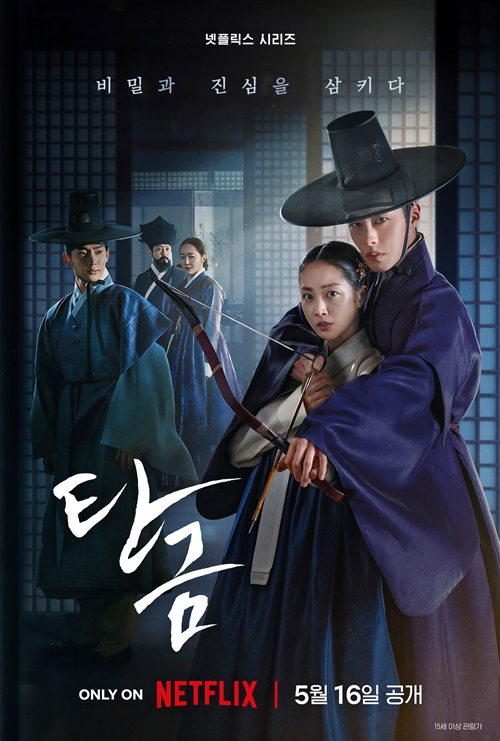
Lee Jae-wook X Jo Bo-ah 'Tan Geum' main poster and trailer...to be released next month on the 16th < Entertainment < Culture < Article - Singlelist Slist
On the domestic online community Theqoo (더쿠), comments were actively exchanged regarding writer Park Hae-young's article criticizing 'flat-fee contracts.' Among them, questions and skeptical views coexisted concerning the financial aspects and risk sharing of contracts, with comments such as, "You already received the contract fee, didn't you?", "Even if it fails, isn't the burden less because it's Netflix?", and "If it fails, do they return the money...?" This indicates that the Korean public is highly interested in the fairness of the creator compensation structure, beyond just a work's success.
Writer Park Hae-young strongly pointed out the problems with 'flat-fee contracts' (매절 계약), where a lump sum is received upfront, stating, "Even if it's a huge hit, the reality of not receiving a single penny for its success must change." This is a direct criticism of the current system where the success of K-content does not fairly return to its creators. (Source: Theqoo)
Drama 'Tantra' Key Events Timeline
Writer Park Hae-young
The Global OTT Era: The Need to Redefine Creator Compensation Systems
Global OTT platforms have played a decisive role in the worldwide spread of K-content, but they are also causing conflicts with traditional contract methods. A 'flat-fee contract' (매절 계약) is a system where a fixed amount is paid to the writer upfront during the initial production phase, with no additional profit sharing regardless of the work's subsequent success. While this can guarantee a stable initial income for writers, it also presents a structural limitation: even if a global blockbuster like 'Squid Game' emerges, the creators do not get to share in the fruits of that success.
[Review M] Overindulgent 'Tan Geum'...too much to even swallow Lee Jae-wook and Jo Bo-ah's melodrama Imbc
Writer Park Hae-young's criticism emphasizes the necessity of a new compensation system that can resolve this imbalance and ensure that the success of K-content in the global market is fairly returned to its creators. This goes beyond a simple individual claim; it is a crucial task that must be addressed for the continuous development and establishment of a healthy ecosystem for the entire K-content industry. (Source: Theqoo)
Counterarguments to 'Flat-Fee Contracts': Production Stability and Risk Management
Despite writer Park Hae-young's criticism, 'flat-fee contracts' (매절 계약) also offer practical advantages from the perspective of production companies and global OTT platforms. By paying a fixed contract fee to the writer at the initial production stage, production companies can reduce additional financial burdens that might arise if a work fails to succeed. Furthermore, it has the advantage of avoiding complex profit-sharing structures and simplifying the production process, thereby accelerating content planning and creation.
Some argue that flat-fee contracts ensure a minimum stable income for writers, and since not all works succeed, risk management is necessary. Global OTT platforms, in particular, tend to prefer lump-sum contracts rather than applying complex profit-sharing systems across various countries, given their characteristic of simultaneous worldwide release. (Source: Theqoo)
[Analysis] Creator Rights for a Sustainable K-Content Ecosystem
The case of the drama 'Tantra' reveals a critical juncture of change facing the K-content industry. The emergence of global OTT platforms with immense capital has expanded the reach of K-content, but it also raises concerns that existing unfair contract practices could intensify. If creators do not receive fair compensation, the driving force for producing high-quality content will weaken in the long run, ultimately leading to a decline in K-content's competitiveness.
Therefore, it is necessary to pay attention to the voices of the writers who created the work, just as much as the high expectations for a drama starring actors like Song Hye-kyo and Gong Yoo. For the K-content industry to achieve truly sustainable growth, establishing a fair ecosystem where creators receive just compensation, beyond merely a work's success, is essential. While such structural issues are difficult to resolve in the short term, this 'Tantra' issue could serve as a catalyst for promoting relevant discussions.
'Tantra' is set to be released on Netflix on December 11, and its box office performance, along with the industry's future response to the 'flat-fee contract' controversy, will be key points to watch. In particular, whether writer Park Hae-young's challenge will lead to a movement of solidarity among other creators, or whether global OTT platforms will propose concrete measures to improve the creator compensation system, will be crucial variables. As K-content's global status rises, it remains to be seen whether the unreasonable practices that exist behind the scenes can be improved. (Source: FunKorea.ID, Theqoo)
![리뷰M] 과식한 '탄금'…이재욱·조보아 멜로까지 삼키기엔](https://kagit-media.atreez.cc/editorial/scout/cmvja2iz7zh6yms1ey9kanq38/6981e7d4f8f9.jpg)