K-Biz

K-Culture business, OEM/ODM, and market data

Yoo Ah-in shockingly betrayed his own sister for thousands of illegal drugs!K-Pop

Yoo Ah-in shockingly betrayed his own sister for thousands of illegal drugs!

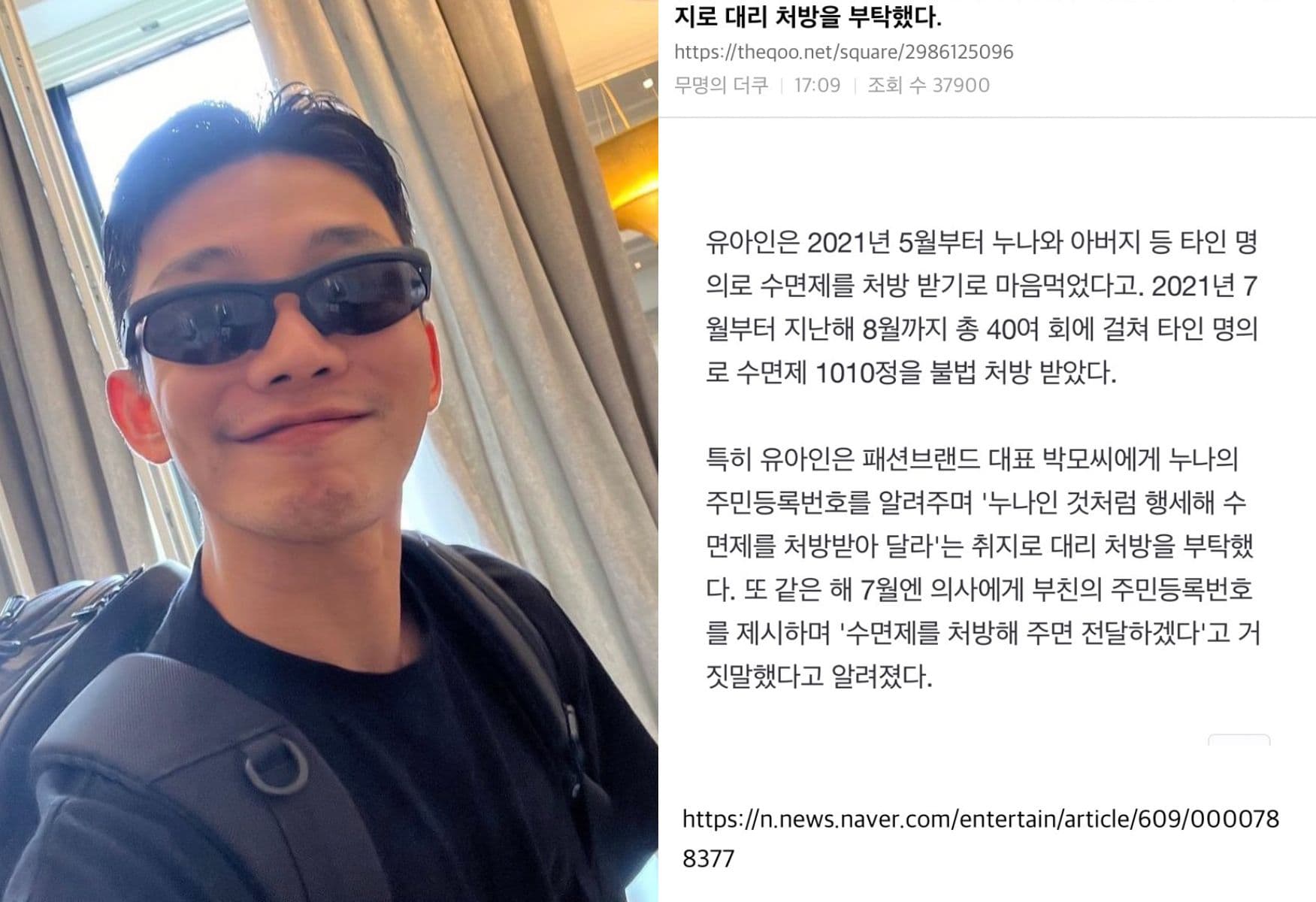
South Korean actor Yoo Ah-in is under investigation due to the recent scandal of having illegal botox injections, but what's more shocking is that he has also been found to be using deadly drugs like marijuana, cocaine, and ketamine, causing a significant controversy. Recently, it has been reported that he had been prescribing sleeping pills under the names of his sister and father, which has sparked further discussions. When the news of Yoo Ah-in's alleged involvement in drugs broke out, not only was his house searched, but he was also officially summoned as a suspect by the Narcotics Crime Investigation Department of the Seoul Metropolitan Police Agency, leaving his long-time fans greatly shocked. It was recently revealed that Yoo Ah-in had been obtaining sleeping pill prescriptions under the names of others, including his sister and father, since May 2021. He even illegally obtained more than 1,010 sleeping pills under others' names about 40 times from July 2021 to August last year. According to reports, Yoo Ah-in even gave his sister's ID number to Park, a representative of a fashion brand, asking for the same prescription as his sister's. In July of the same year, he presented to the doctor his father's ID number, rhetorically stating, "If prescribed sleeping pills, they will be handed over to my father." However, in reality, he was telling a lie. Moreover, Yoo Ah-in, who is suspected of drugs, also remitted 13 million Korean won to his accomplices to help a female representative of a certain fashion brand escape abroad. It is said that this female representative and Liu Yaren have a good relationship and even erased the investigative targets and messages stored in the mobile phone. After the news was exposed, it immediately sparked a wave of discussion among netizens. Many were shocked and commented, "Is 1000 sheets for real?" "How can this be? That's crazy," "Such a glamorous person actually did that, I feel really weird... We really have to live well." In addition, some netizens commented, "Even if it's just sleeping pills, 1000 pills are really a lot," "He really did everything," and "He's totally drug-addicted," expressing their disbelief at Yoo Ah-in's behavior.

阿咩李卡諾3 years ago
From idol auditions to variety shows! The overwhelming influence of various limited derivative groups cannot be ignored!K-Pop

From idol auditions to variety shows! The overwhelming influence of various limited derivative groups cannot be ignored!

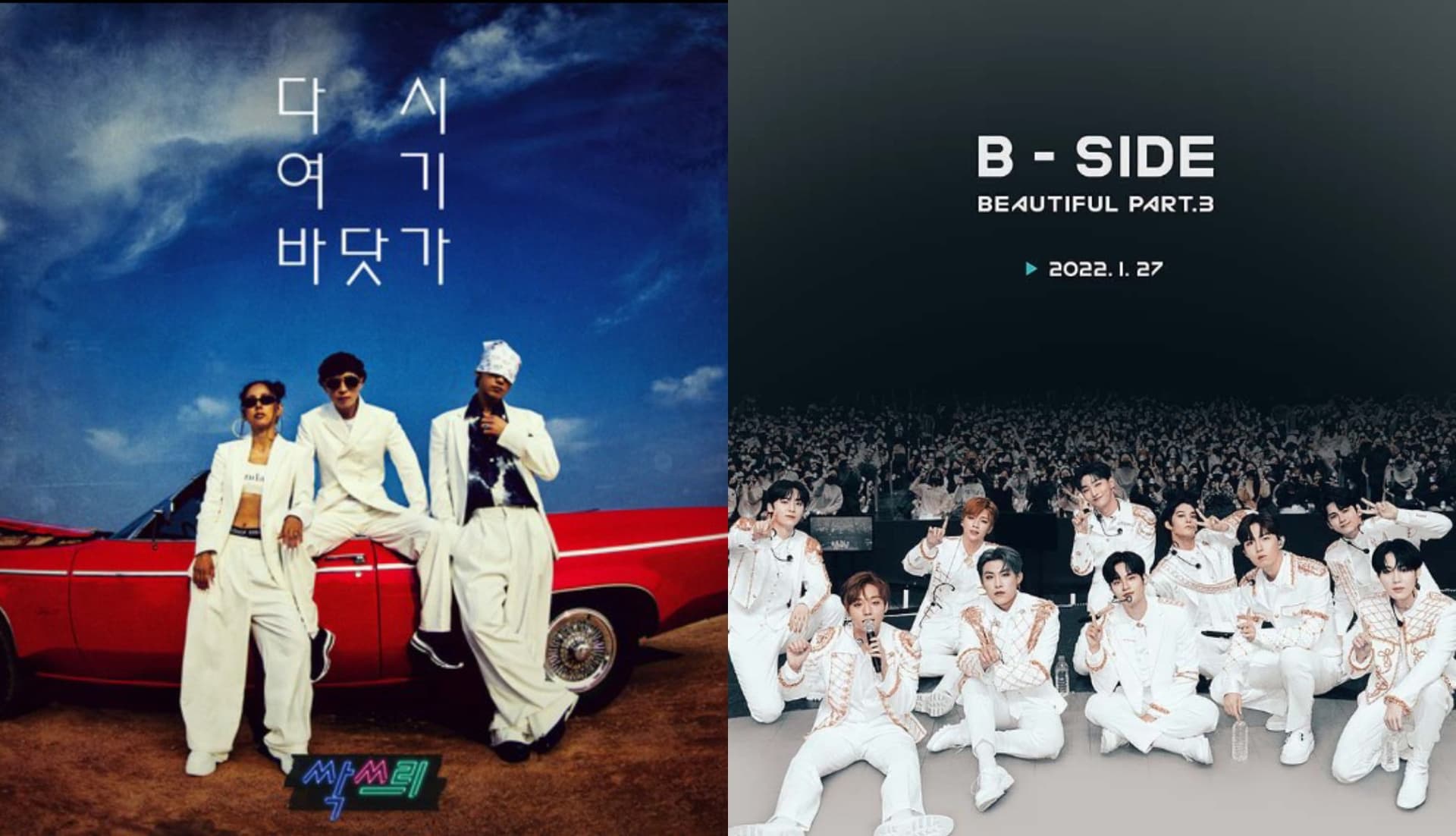
Mnet, known as a star-making machine, has not only created the 'Produce 101' series, which made everyone vote passionately, but also the audition series of Ke1per and ZERO BASE ONE, who are still active today. Indeed, they have all produced extremely popular "spin-off groups". In fact, the so-called derivative groups not only include "limited groups" with contract periods, but also many popular online groups and temporary combinations formed from variety shows. Although each "derivative group" has different characteristics, they have indeed gained more attention through the shows. 1."Official group born from the audition"If we talk about "official groups" that were born from talent shows, like MONSTA X from 'no.mercy', Twice from 'Sixteen', WINNER from 'Win: Who is next?', iKON from 'Mix&match', and TREASURE from 'YG Treasure Box', these are all groups created by talent agencies through their own talent shows. Since they debuted from a single talent agency, they are relatively stable compared to limited groups with contracts lasting 1-3 years. However, how to operate in the long term is a question that the talent agency needs to carefully consider. After all, they started spending a lot of money on the program, investing in filming and even various competitive stage performances. Although it can be said that they will get a certain return through the broadcast of the program, in the end, they will only choose the people they need. Considering the cost of filming many trainees, it's quite considerable. 2."Designated Groups" in National ReferendumThe limited group selected by audience voting, formed by trainees from different talent agencies competing together, could be considered one of the most discussed topics in recent years. Even though they come from different agencies and their debut times are set, they are able to create sparks and chemistry among the trainees through competitions, even helping trainees find their own positions in future groups. Though some people might think that editing could affect the viewing experience, even considering it as a program effect, many trainees have found more compatible partners through interaction and preparing for competitive performances in the show. There are also many fans attracted to these couples, the influence of these combinations will follow along with the future interest when they debut. In addition to the members who stood out from the audition, many trainees have remained popular after the competition. The chemistry and good feelings between them have been well received by fans, leading to their debut as a group. An example of this is JBJ, which was formed after the end of Produce 101. The group was composed of six trainees, who at the time were ranked between 21st and 30th, including Lu Taiyan, Takada Kenta, Kim Sang Gyun, Kim Yong Guk, Kwon Hyun Bin, and Kim Dong Han. Despite not becoming official members of the competition-limited group, they became a highly successful case of a spin-off group from selection. Although they only operated for a short seven months, the response to their album and songs was very enthusiastic, and it gave many fans hope for the future. Even if they can't officially become the final limit group members, they are still loved by the public through other debut channels. However, besides forming new limited groups with fresh trainees, there are also shows specifically allowing debuted artists to regroup and create new group colors. For example, "The Uni+" launched by KBS in 2017 and the currently popular "Queendom Puzzle", although the competition format is not exactly the same, the new group colors created by debuted artists are also one of the alternative group features. 3. Variety show derived groups are super popular! However, "limited groups" and "derived groups" are not only the right of survival audition programs! The groups born from variety shows can be said to stir up another discussion in the MZ generation. Variety show "What to Play?" has introduced various colorful "limited combinations". For instance, in 2020, they launched the mixed-gender group+summer song collective "SSAK3" (Yoo Jae-suk, Rain, Lee Hyo-ri) and the strong "Unnie" style "Refund Expedition" (Lee Hyo-ri, Yoon Jung-soo, Jessi and Hwasa) not only gained immense popularity, but they also swept all the major music charts as soon as their songs were released, receiving an incredibly passionate response. As a spin-off group born from a variety show, the members of the group are basically familiar figures to the audience. Plus, due to the different roles each member plays in the variety show, it helps to create the effect that the public wants and continues the style of the program. Compared to the persona and image required by general idols, variety show derivative groups can be said to focus on "resonating with the public" and "sharing joy". While paying attention to the group, the audience can also enjoy the fun of the show. Since it is not of a competitive nature, the group also has more entertaining attributes. Nowadays, project groups and sub-units are not just born out of 'competition' or 'survival'. They also emerge through various plans, allowing the group to exert its maximum influence and popularity during its activities. This adds an element of fun, and also introduces new elements and fusion to the entire Kpop market.

阿咩李卡諾3 years ago
[In-depth Report] Top A-artists is too expensive to hire! Costing 1 billion Korean won per episode! The industry points out 4 works that have greatly succeeded with a counter strategy.K-Pop

[In-depth Report] Top A-artists is too expensive to hire! Costing 1 billion Korean won per episode! The industry points out 4 works that have greatly succeeded with a counter strategy.

Following on from the previous article discussing the impact of Korean dramas after they landed on Netflix, and the constantly increasing production costs, many production companies are facing threats from domestic OTT platforms. This is also drawing significant attention to the future direction of Korean dramas. As previously mentioned, the entry of international OTT platforms has brought about changes in the South Korean drama market. Indeed, the arrival of these well-funded platforms has elevated the overall quality of the industry's productions. From writers, directors, performers, amd casts to the entire production team, they have all grasped the most important elements during filming. However, without enough preparation, more TV dramas failed to level up. According to a report by "Herald Economy", the rising production costs are undoubtedly related to personnel costs; thus, under the circumstance of rising labor costs, it has become more difficult for production companies with weaker capital. In the past 1 to 3 years, among the TV dramas that have been pre-produced, there hasn't been a channel or platform found to broadcast them, and over 20 such dramas are just accumulating in the warehouse. Therefore, if a drama is already produced but cannot be aired or listed on a platform or television station, it will also have an impact on the production company. In addition, when discussing personnel expenses, it's difficult not to touch on the impact of actor fees and the cost of shooting individual episodes. If the production cost of each episode exceeds 700 million to 800 million Korean won, then most TV stations or production companies may face the loss due to excessively high production costs. But it's a harsh reality that, in terms of so-called A-list actors online, the number of actors who earn more than 300 million Korean Won per episode is not small. Therefore, if we are looking for top-tier casts for domestic and overseas viewers, the maximum pay per episode could reach 1 billion Korean Won, which could be said to take up a high proportion of the production budget. Under such conditions, platforms and production teams that can bear the burden, such as international platforms Netflix, Disney+, Apple TV and others, are more capable of handling such works compared to local Korean teams. This is also one of the reasons why many works eventually lean towards international platforms. But interestingly, an actor's salary may be somewhat influenced by their stardom and popularity, but it's not a hundred percent assurance of the success of a drama. The problem is, with the fees of other actors on the rise, it's hard to secure actors at the ideal price. Therefore, as the overall production costs increase, the opportunities to invite top-paid actors to appear in dramas of the three major TV stations and terrestrial TV stations will gradually decrease. In addition, as the viewing habits of the current audience gradually change, they use OTT watching more often than TV. Therefore, compared to being broadcast on TV, the influence and popularity of OTT can be said to be getting higher and higher. Nowadays, many actors hope to become world-class actors through international platforms like Netflix. After all, just starring in one drama can attract millions of followers and fame internationally, providing more exposure opportunities. This has also made Netflix a powerful platform for launching globally popular works. In other words, in the current industry, Netflix not only holds an advantage, but even tends to monopolize the market. At present, there are no OTT platforms that can compete with Netflix. This also worries the public, as there might be a situation in the future where only Netflix can determine the prices. But on the contrary, there are many who win with excellent content to attract the public's attention and even receive good feedback, rather than embracing the international platform from the start. There are also many such cases. For example, Korea's SLL (formerly known as JTBC Production) has established a good reputation with many original quality works. For example, in the four TV dramas launched in the first half of this year alone, they not only used new writers successfully popular, but also works written by debut writers like "The Interest of Love", "Agency", "Doctor Cha", "The Good Bad Mother" etc. are all mini-drama debuts." According to a report by Korean media, SLL's chief producer once stated, "If we used to prioritize the quality of the work, now we should also consider its mass appeal, especially in the highly competitive weekend dramas. The chief producer believes that 'Doctor Cha' which achieved the highest viewership in the first half of this year perhaps has a strong and popular color of weekend serial drama. However, weekend dramas are not low-quality works but exhibit family dramas in our own way. By adding mass appeal to the existing content, it can gain widespread favor.'" It's not hard to see that rather than flocking to international platforms in order to gain substantial resources, if one can produce works that are both rich in content and substantial, even mini-series with not so high capital can also produce works that cater to public taste and gain popularity, slowly addressing the problems currently faced by the industry.


Admin3 years ago
[In-depth Report] Relying on Netflix to make money? The cruel reality unveiled in the Korean drama industry:  it will eventually be strangled!K-Pop

[In-depth Report] Relying on Netflix to make money? The cruel reality unveiled in the Korean drama industry: it will eventually be strangled!

News broke last month that the Korean Original creation team of Disney + is suspected of disbanding, with not only the members of the team leaving Disney +, but also rumors that it is related to Disney's global layoffs. According to a report by the Korean media outlet Chosum, industry insiders have revealed that 15 members of the Korean original content development team at the international OTT platform, Disney+, have left the company, but the original content they produced is currently being retained. There has been no official statement regarding the disbandment of the South Korean Disney+ original content development team. However, external analysis suggests that the reason for the team's dissolution is due to its failure to achieve significant growth within South Korea. In fact, Disney+ began its services in South Korea on November 12, 2021. However, as of May this year, the number of active users of Disney+ in Korea is approximately 1.79 million, which is less than the same period's membership numbers of local OTT platforms such as tving (5.15 million), Coupang Play (4.31 million), and Wavve (3.92 million). However, if we look at Netflix, which is also an international OTT platform, it not only continues to lead the development of original content in Korea, but has even released many acclaimed and popular works. But recently, Korean media has conducted an in-depth analysis that the current development of Korean drama is facing a pressing crisis. According to a report by Korean media "Herald Economy," although K-Content (cultural content) has been very active internationally in recent years, Korean dramas, which are considered a major influence, are facing significant crises. The report points out current issues such as the escalating production costs of Korean dramas, over-reliance on Netflix, threats to domestic OTT platforms, and overall reduction in Korean drama production. Reports indicate that due to the recent linear rise in television production costs, from about 700 million Korean won per episode a few years ago to 1 billion or even 1.5 billion won per episode, not every production company can afford such large numbers under this kind of competition. Even after investing a significant amount of funds, no matter how successful the drama might be or how well-known the work becomes, it is still impossible to recoup the production costs. Thus, if one truly wants to gain abundant resources and break into Netflix, it seems that one will still have to line up and wait for now. There aren't many platforms that can bear such huge production costs, which has caused an imbalance in the entire industry. Although there are now many local OTTs rising in South Korea, the majority of the situation still relies on a single model, which is quite dangerous for the industry. A representative from a certain TV production company said, "The trend of Korean dramas constantly entering the global OTT platform, Netflix, is inevitable, and it is only a matter of time before this kills the circulation and diversity of the market and platform." Due to the issues that arose from the initial production costs, it was possible to produce TV dramas in the past without investing a high amount of production cost. However, it is feared that we have now reached the limit, creating a market cycle of "over-betting large amounts of money to gain substantial returns". For instance, the annual production of dramas used to be around 100-150, but due to a surge in production costs, it has reduced by at least half, leaving only about 70. According to statistics by the Korean media《Herald Economy》, even the 'mini-series' produced by the three major TV stations have deficits of several hundreds of millions or even billions. This phenomenon is also happening on broadcast television, such as the recent production of many popular shows by JTBC and tvN, two cable TV stations. Even if all advertisements are sold out during the drama broadcast time, they still face deficit. Therefore, many TV stations have started to fill in the gaps left by the dramas they could not recover by adding variety shows. As even large-scale variety shows do not cost as much to produce as dramas, channels like tvN have begun producing a range of variety shows, primarily those that can be exported overseas. Even though the industry behind Korean dramas may seem far removed from the audience, it's hard to imagine the many connections behind each successful work, from 8-episode mini series to regular 16-episode dramas, each having different impacts. (To be continued)

阿咩李卡諾3 years ago
[In-depth Report] Making a documentary only a few years after debut? The real reason why the industry is rushing to produce idol documentaries on OTT.K-Pop

[In-depth Report] Making a documentary only a few years after debut? The real reason why the industry is rushing to produce idol documentaries on OTT.

Whether it's dramas or films, everyone has their own different preferences. However, to invoke the resonance and attention of the majority, besides being entertaining, it's equally important to possess mass appeal. However, when it comes to the entertainment industry, the speed of Kpop's global spread is quite fast, not only sweeping across Asia, but also gradually expanding to the European and American markets. However, compared to the global music market, it still cannot be called popular or mainstream. In other words, Kpop relies more on a solid fan base than casual listeners to maintain a large volume of listens in a short period of time. Given the certain limitations of Kpop and idol-themed content, why have OTT platforms continued to produce idol-themed documentaries over the past two or three years? And besides fans, do people actually watch these documentaries? Unlike typical TV and film productions that have clear scripts and character settings, documentaries express events and experiences from a narrative perspective. Therefore, they mostly attract an audience interested in the event, field, or specific subject matter. Even though the audience for documentaries is quite limited, it's not hard to notice that many OTT platforms have been rushing to produce idol documentaries in recent years.According to the report by Korean media 'Spotvnews', the continuous production of idol documentaries is not only to showcase the glamorous side of idols on stage, but also to reveal the reality behind the scenes. A producer from a certain planning company in the industry said, "From the standpoint of a content creator or from the public's perspective, idol group members are very interesting characters." To elaborate further, "As an artist, one needs to present a world view or performance that aligns with a specific group's direction set by the company. However, they also need to demonstrate perfection and casual charm on stage, indirectly showcasing the dual burdens that idols carry, unable to fully express themselves". How to select shooting groups and talents? Industry insiders revealed that due to the competition of more diverse content, from the perspective of the industry, the number of groups that have recently received strong attention has increased. Under the circumstance where the public's preferences are increasingly subdivided, even if only focusing on one team or one member, it can fully arouse meaningful attention. However, it's not to say that only top idols are eligible for documentary films. As mentioned earlier, due to the certain limitations of the documentary audience, if groups with more topicality or popularity start first, it would be easier to attract the audience. In 2020, Netflix produced "BLACKPINK: Light Up the Sky" with the girl group Blackpink, and Disney+ actively planned documentaries centered around Korean idols.Like the BTS documentary 'BTS Monuments: Beyond the Star', and the individual documentary of member J-Hope, 'j-hope IN THE BOX'. In addition, there are the behind-the-scenes stories of Super Junior, who have been in the industry for 18 years, in "Super Junior: The Last Man Standing". The younger group, NCT 127, has produced "NCT 127: The Lost Boys" based on their world tour process. Also, "TOMORROW X TOGETHER: OUR LOST SUMMER" is set to be released this month. In fact, promoting or marketing idol artists through documentaries is an alternative way to reach new audiences. Although most of the content in the film is likely to resonate with fans, it is also through a narrative mode that allows idol artists to show a different side than what the public usually sees, compared to on stage or in a dynamic mode.

Admin3 years ago
[In-depth Report] More Overworked than Artists! KPOP Managers Work Overtime Without Complaining! 'Extreme Jobs' Content Revealed!K-Pop

[In-depth Report] More Overworked than Artists! KPOP Managers Work Overtime Without Complaining! 'Extreme Jobs' Content Revealed!

If we say that artists play the role of showcasing in the entertainment industry, then the agents and staff behind the scenes can be considered the unsung heroes who drive things behind the scenes. Although people often joke, "Being an agent is an extreme job, you have to know everything," being an actual agent is not easy at all. From the MBC observational reality show "Omniscient Interfering View ", you can probably get a sense of the range of duties a talent manager has. However, since the show is broadcasted, not all of the specifics are necessarily revealed. So, what exactly does the role of a celebrity manager encompass? Firstly, let's distinguish based on job position. Although the way of separation might slightly vary from company to company, one could say they are more or less the same. In general, the hierarchy includes positions like field manager, team leader, department head, representative, and so on. The term commonly referred to as a "road manager" generally means a "field manager," who is responsible for all the schedules of an artist, and even needs to act as a protective measure in crowded situations, protecting the artist like a bodyguard. Due to the hectic schedule of celebrities, they experience high levels of physical exhaustion. However, those who just entered this industry usually start from the basics and handle complex matters. Only after accumulating at least 5 years of experience, there is a possibility to become a group leader or a room leader. After becoming a team leader or a manager level, one will begin to manage multiple on-site brokers, responsible for the artist's schedule adjustment, contract negotiation and promotion etc. The representative of the entertainment management company is responsible for the management of the company, setting the direction of the artists' activities. They will also discover new artists and provide financial support. What are the requirements to become a manager? Strictly speaking, apart from a driver's license, there is no specific major required to do this job. In fact, whenever entertainment planning companies are short of managers, they would also post job advertisements on job hunting websites, just like any other job hunting. However, some people might get into the industry through introductions and recommendations from acquaintances. In addition, depending on the different companies, the demand and regulations for talent agents can greatly vary; some companies even require job seekers to submit documents like criminal records for review of their past. Although academic qualifications are not necessary, many universities or tutoring schools offer related courses for further study, such as Gyeonggi University, East Asia Broadcasting University, Seoul Art Specialist School, and entertainment companies like SM Entertainment and Fantagio also offer courses for talent agent training. Due to the nature of a manager's job, which essentially involves constant communication and coordination with people, they face all sorts of people, not just the artist, but also PDs, journalists, and concert planners. If they are too cautious or shy, it can cause a significant amount of stress. Therefore, in order to secure better opportunities for their artists, it's crucial to maintain good interpersonal relationships and possess quick thinking and adaptive reaction skills. Since it requires being by one's side all the time and expending a lot of effort, what is the average salary? Looking at the starting salary of a typical rookie on-site broker, it's usually around 2 million Korean Won. According to statistics from South Korean job websites, the monthly average income for entertainers and sports agents, including talent managers, is 2.75 million Korean Won. As the types of content and platforms diversify, the importance of agents is becoming increasingly significant. However, the period as a rookie agent can be extremely tough. Not only do they have to invest a lot of physical and mental energy, but their salary is also quite low. As a result, the turnover rate in the industry can be quite high. In fact, while everyone's focusing on the issue of celebrities overworking, agents are stuck in this working state every day. They must work according to the celebrity's schedule, from early in the morning till late at night, even till the wee hours, but they can only explain this due to the "nature of the job". Therefore, Korea's Ministry of Employment and Labor and Ministry of Culture, Sports and Tourism have previously proposed a consensus on improving the working environment for the protection of labor rights of those engaged in the fields of performing arts management and broadcasting production. In fact, in July last year, the Ministry of Employment and Labor conducted labor supervision on two large-scale performing arts planning companies, revealing 12 violations of labor relations law, including the non-payment of overtime allowances, violations of working hours, and failure to implement sexual harassment prevention education. Although the government is willing to start cleaning up the film and television brokerage industry, many practitioners are quite optimistic. However, some people believe that "it's natural to actively seek overtime pay for overtime work, but they also fear being marginalized and possibly retaliated against in the future. After all, the circle is so small, so they hope that the government can implement relevant regulations for protection."

Jenny3 years ago
(雷)撇开老子维不说…台韩版《想见你》5大落差!网友超两极反应曝光!K-Pop

(雷)撇开老子维不说…台韩版《想见你》5大落差!网友超两极反应曝光!

由柯佳嬿、许光汉和施柏宇共同主演的台湾人气热剧《想见你》,在2019年播出播出后不仅在中日韩获得许多喜爱,更在去年底翻拍成电影版,票房成绩十分亮眼。 然而《想见你》在获得亚洲许多国家的喜爱后,韩国Netflix也在今年推出翻拍版本《走进你的时间》并找来安孝燮、全汝彬及姜勋主演。原以为能延续台版的高人气,再度掀起一阵追剧风潮,没想到刚上线的第一天,就因为安孝燮在剧中「年老李子维(南时宪)」的造型落差甚大,遭众多网友议论。 当时就有网友认为韩版剧中的“年老李子维”也就是“年老南时宪”的装扮过于邋遢,不仅发型服装都让南时宪看起来很像露宿街头而不是经历沧桑,加上当时台版的“年老李子维”的形象看上去干凈且散发着独特的品味,因此不少观众纷纷表示对角色的造型大叹相当失望。然而撇除台韩版的角色造型,其他不同之处也引起许多剧迷的关注!这次就来整理出让不少台韩网友讨论不断的五个落差之处,并寻出台韩对于相同作品不同拍摄手法与呈现方式的差异。 1.台版「三人在雨中奔跑」VS 韩版「男女主角雨中奔跑」 如果提到全剧最为经典的场面,雨中奔跑的场景可以说是建立起《想见你》满是青春的氛围。在台版原本是要凤南小队三人一起撑伞,但因风雨太大伞被吹走,因而有了三人在雨中奔跑的场景。这幕不仅是李子维(许光汉饰)看着在雨中奔跑的黄雨萱(柯佳儿饰)更确定的自己对她的情感,李子维与黄雨萱之间的情感正式在1998年时双向蔓延,此外那场雨中也让三人一起笑着、奔跑的画面更为动人。 但相较于韩版,由原来的三人改成只有男女主角南时宪(安孝燮饰)和韩俊熙(全汝彬饰)在一个美丽的树林中奔跑。虽然看得出剧组相当用心,甚至到了有名的南怡岛经典拍摄,让整个雨中奔跑的画面色彩更鲜艳,更唯美,但因为名场面中,三人奔跑的设定变成了两人,也让网友感觉到,这样的改变似乎就不太对味,加上台版的片段似乎更加侧重在李子维和黄雨萱之间的感情,所以才美,而不仅仅是因为场景的选择才衬托出唯美的气氛。 为陈韵如庆生的台词删减 除了经典场景外,李子维与莫俊杰在1998年替陈韵如庆生的许愿台词可以说是贯穿整个时空穿越中,赋予了庆祝生日的另类意义。 无论是1998年的陈韵如还是未来的黄雨萱,都问了关于“第三个愿望要闭上眼睛许愿不要说出口”的问题,也是事后黄雨萱在27岁生日时,希望在许完愿望就能看到王诠胜时,回想当初王诠胜说“不说出口的愿望不是比较容易实现,而是即使没实现也不会太难过”的一席话,虽然是最为渴望实现的愿望,却也是最遥远的愿望之一。 然而韩版是三人到了樱花树下一起庆生,剧中权敏周(陈韵如)并没有这段台词,而是用因为家里似乎都不太重视、忽略她的生日而带过了庆生的场面,让不少观众看了直呼可惜。 3.原本的王诠胜的过去 在原著中王诠胜因为是同性恋,喜欢着学校的男同学,在秘密被揭发后却遭来同伴的霸凌与欺负,而王诠胜最后也为此走上绝路。在那段诠释王诠胜的戏份中,虽然不长,甚至没有一句台词全都只能用演技呈现,但演出力道却相当强劲也充满余韵,不少观众在看了那段戏份更是心痛不已,在无声、没有言语的表达下,却依旧让人震动,而整段像黑底白字的打字,有如周遭的沉默,来不及挽救对世界绝望的王诠胜。 韩版的部分则是以具延准(王诠胜)与当时自己密友的泰河在出游时发生了车祸,造成了意外。然而值得一提的是,剧中的泰河则是找来团体SF9的成员路云客串演出,相较于原著中王诠胜默默喜欢的单恋,韩版则是将两人对彼此默默的心意展现出来。虽然有部分网友认为同性恋这段描写的力道没有那么的强烈,但的确与台版做出了相当大的区隔。 即使只是一个眼神,李子维都会认得黄雨萱。 在剧情进入尾声中,黄雨萱终于最后一次回到1999年,并成功翻转了陈韵如在小年夜死去的过去。由于当时的李子维发现了眼前人并非黄雨萱而是陈韵如,因此也开始苦恼并难过自己可能再也见不到黄雨萱,但就在雨萱刚重回1999年并顺利让原本的陈韵如活下来,从原本坠楼的建筑物走出来时,黄雨萱一句话都没说,李子维一眼就认定眼前的人就是黄雨萱,并跑过去抱住对方,也展露了李子维对黄雨萱的爱早已穿越了时空,就算一句话都不用说,但只要一个眼神就能知道对方是谁,也呼应了最后无论黄雨萱在哪,李子维一眼都能认出她来。 而韩版则是在韩俊熙(黄雨萱)看到南时宪(李子维),并喊了他的名字后,南时宪这时才慢慢感受到眼前的不是权珉周(陈韵如)而是韩俊熙(黄雨萱),两人并相拥而泣。而这段也让网友有些小失望,毕竟原版营造出的是一眼万年,就算不用任何语言,就算穿越了时空,也能一眼认出对方,而不是在开口后才认知到究竟是哪个她,让不少网友直呼可惜。 5.莫俊杰遮着耳朵,读陈韵如的唇语。 虽然莫俊杰需要戴助听器才能听清楚话,但剧中莫俊杰也提到,外面的世界太吵杂,因此有时候也会选择不戴助听器,遮住耳朵,去除外界所有干扰,看着别人的唇语。 面对陈韵如,莫俊杰更是想专心并贴近去感受陈韵如的感受,因此在一开始莫俊杰第一次看着顶楼上的陈韵如时,便选择摘掉助听器远望在顶楼上的陈韵如都在说些什么。 由于原著中,莫俊杰第一次看着顶楼上的陈韵如,并摘掉助听器远望读着唇语的部分,主要是以无声静音的方式呈现,但韩版则是在同样的地方,让郑仁圭(莫俊杰)在读权珉周(陈韵如)的唇语时选择了部分有声的演出,也让一些网友认为这似乎与原著对莫俊杰的理解不够深,因为对莫俊杰来说,他不是在用听,而是排除外面的声音在理解陈韵如的心,因此也有网友认被修改的部分不够细致,有些可惜。 虽然是翻拍,但都可以看出台韩两个版本重视及不同的配色。相较于台湾充满青春、清新却带点生涩与充满稚气的风格来说,韩国似乎更讲究场景的变换、气氛的营造及唯美的画面。在取景上都十分了得,拍出来的效果也格外精致,有种精装原著的感觉。虽然两个版本有着不同的落差,但绝对没有好坏之分,因为不论是《想见你》还是《走进你的时间》每个人对于爱、时间的变化与消逝的感受都不同,尽管现实中无法穿越时空,但在自己的时区里,都有不同的解读。

阿咩李卡諾3 years ago
简体中文