[DEEP DIVE] K-Beauty vs. J-Beauty: Two Paths to Radiant Skin
In the global beauty market, the skincare philosophies of Korea and Japan—K-Beauty and J-Beauty—have long been a hot topic. Both approaches promise healthy, radiant skin and have captivated consumers worldwide, yet they feature distinct differences in their methods and ultimate goals. So, which beauty philosophy is truly the best fit for your skin?
Two of the most popular philosophies in skincare and beauty both originated in Asia: K-Beauty and J-Beauty. These two skincare approaches, hailing from Korea and Japan respectively, have received international acclaim for their ability to deliver glowing, flawless complexions. K-Beauty, in particular, has garnered global attention over the past few years, while its Japanese counterpart, J-Beauty, has also seen a significant surge in popularity in recent months [Shikobeauty.com, Dermstore.com].
K-Beauty: The Art of Innovation and Multi-Step Routines
K-Beauty emphasizes 'innovation' and 'multi-step routines.' It focuses on hydrating, brightening, and anti-aging, ultimately aiming for 'Glass Skin' [Dermstore.com]. K-Beauty routines are well-known for typically consisting of an average of 10 steps, though they can extend to an extreme of 15 steps or be condensed to 5 [Dermstore.com].
Key ingredients often include innovative components like Snail Mucin, Bee Venom, and Propolis [Dermstore.com]. This reflects K-Beauty's philosophy of offering proactive and multi-faceted solutions to skin concerns. According to Shikobeauty.com at the time, K-Beauty tends to lead the market by continuously exploring new ingredients and technologies.
J-Beauty: The Power of Simplicity and Tradition
In contrast, J-Beauty concentrates on preventative, long-term skin health management based on 'simplicity,' 'efficacy,' and 'tradition' [Shikobeauty.com]. It adopts a 'less-is-more' approach, aiming for maximum effect with minimal products [Dermstore.com]. J-Beauty routines typically involve 3-4 steps, focusing on essential stages like cleansing, moisturizing, and sun protection.
Key ingredients utilize time-tested traditional components such as Green Tea (Camellia Sinensis Leaf Extract), Rice (Oryza Sativa (Rice) Bran Extract), and Hyaluronic Acid [Dermstore.com]. J-Beauty focuses on long-term skin health and protection rather than immediate fixes, emphasizing building the skin's inherent strength [Dermstore.com].
| Category | K-Beauty | J-Beauty |
|---|---|---|
| Philosophy | Innovation, Multi-Step Routine | Simplicity, Efficacy, Tradition |
| Routine | 10+ steps (up to 15 steps) | 3-4 steps (focus on essential steps) |
| Key Goals | Glass Skin, Hydration, Brightening, Anti-Aging | Prevention, Protection, Long-Term Skin Health |
| Key Ingredients | Snail Mucin, Bee Venom, Propolis | Green Tea, Rice, Hyaluronic Acid |
These two beauty styles also show distinct differences in their skincare goals and the overall experience. K-Beauty tends to strongly pursue immediate changes, using a variety of products to address skin concerns through a multi-faceted approach. This reflects an experimental and adventurous attitude towards new ingredients and formulations. On the other hand, J-Beauty focuses on balancing the skin with fewer, high-quality products, protecting it from external irritants, and maintaining healthy skin from a long-term perspective. This leads to a preference for time-tested ingredients and stable, consistent routines.
In conclusion, it's impossible to say that one of K-Beauty or J-Beauty is inherently superior. The important thing is to choose the approach that best suits your skin type, concerns, and the time and effort you're willing to invest in your skincare. If you enjoy experimenting with various products and desire immediate results, K-Beauty might be a great choice. If you prefer simple, consistent care that pursues long-term skin health, J-Beauty could be ideal. Combining the best of both approaches to create your own personalized routine is also a smart way to go.
What are the biggest differences between K-Beauty and J-Beauty?
Which skin type is K-Beauty more suitable for?
Risabae
4.0M followers
OEM · B2B
Want to make this product yourself?
首爾美妝室
首爾美妝與造型趨勢,K-Beauty 實測。
Cheer the stars of this story
Log in to start collecting cheers on this article:
- Read +5
- Early reader +5 · 20 spots left
- Comment +10
- First comment +20
comments (0)
Related Posts
 K-Beauty
K-Beauty Leader Mediheal Captures Market Spotlight with Continuous New Product Launches
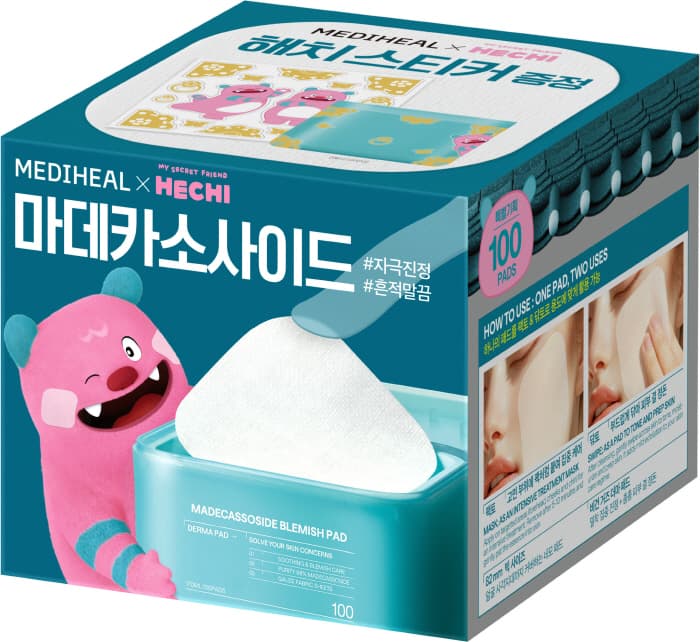
Global derma cosmetic brand Mediheal is accelerating its portfolio expansion within the K-Beauty market by releasing its second collaborative product, the 'Haechi X Mediheal Madeca Soothing Pad,' today (the 26th). This new product is a partnership with 'Haechi' (해치), Seoul's official representative
![[BREAKING] K-Beauty Sheds Discomfort, Ushers in the Sun Serum Era](/_next/image?url=https%3A%2F%2Fkagit-media.atreez.cc%2Feditorial%2Fimages%2Fcmtake8fe8yg0mu1d2bhwm31m%2F30d13b6fecf541e1.jpg&w=1920&q=75) K-Beauty
K-Beauty[BREAKING] K-Beauty Sheds Discomfort, Ushers in the Sun Serum Era
Today (the 26th), reports are emerging, led by Musinsa Beauty, that 'sun serum' is becoming the major trend in this summer's sun care market, suggesting that consumer dissatisfaction with the heavy feel of traditional sunscreens is driving the search for new alternatives. The End of the Heavy Su
![[BREAKING] K-Pop Idols Make a Bold Comeback with Blue & Green Eye Makeup Trends](/_next/image?url=https%3A%2F%2Fkagit-media.atreez.cc%2Feditorial%2Fimages%2Fcmt9453q40k58o01ey5k3f1sp%2F678291b604ad4bd0.jpg&w=1920&q=75) K-Beauty
K-Beauty[BREAKING] K-Pop Idols Make a Bold Comeback with Blue & Green Eye Makeup Trends
K-Pop idols are absolutely captivating fans with their daring color makeup looks! Blue and green eyeshadow, in particular, is emerging as a fresh new trend, injecting a vibrant energy into the K-beauty market. Following the recent Y2K fashion craze, color makeup products like pearl finishes, blu
Trending now
- 1
“Kim Seon-ho Won't Work!” 'Trauma Center' Author Reveals Season 2 Casting Insights, Names Two Top Actors
- 2
TWICE's Park Jihyo Sparks Nose Job Speculation After New Photos Emerge
- 3
YouTuber Park Wi's KTX Fall Controversy Deepens as Wife Song Ji-eun's Reaction, '30 X-rays' Revealed
- 4
Jeon Wook-min, Actress Jeon So-min's Brother, Rejects Offers to Avoid Riding Sister's Coattails
- 5
Dragon Pony's Pyeon Seong-hyeon Departs Group Less Than Two Years After Debut